Add a header to begin generating the table of contents
Linear & Branching Dialogue
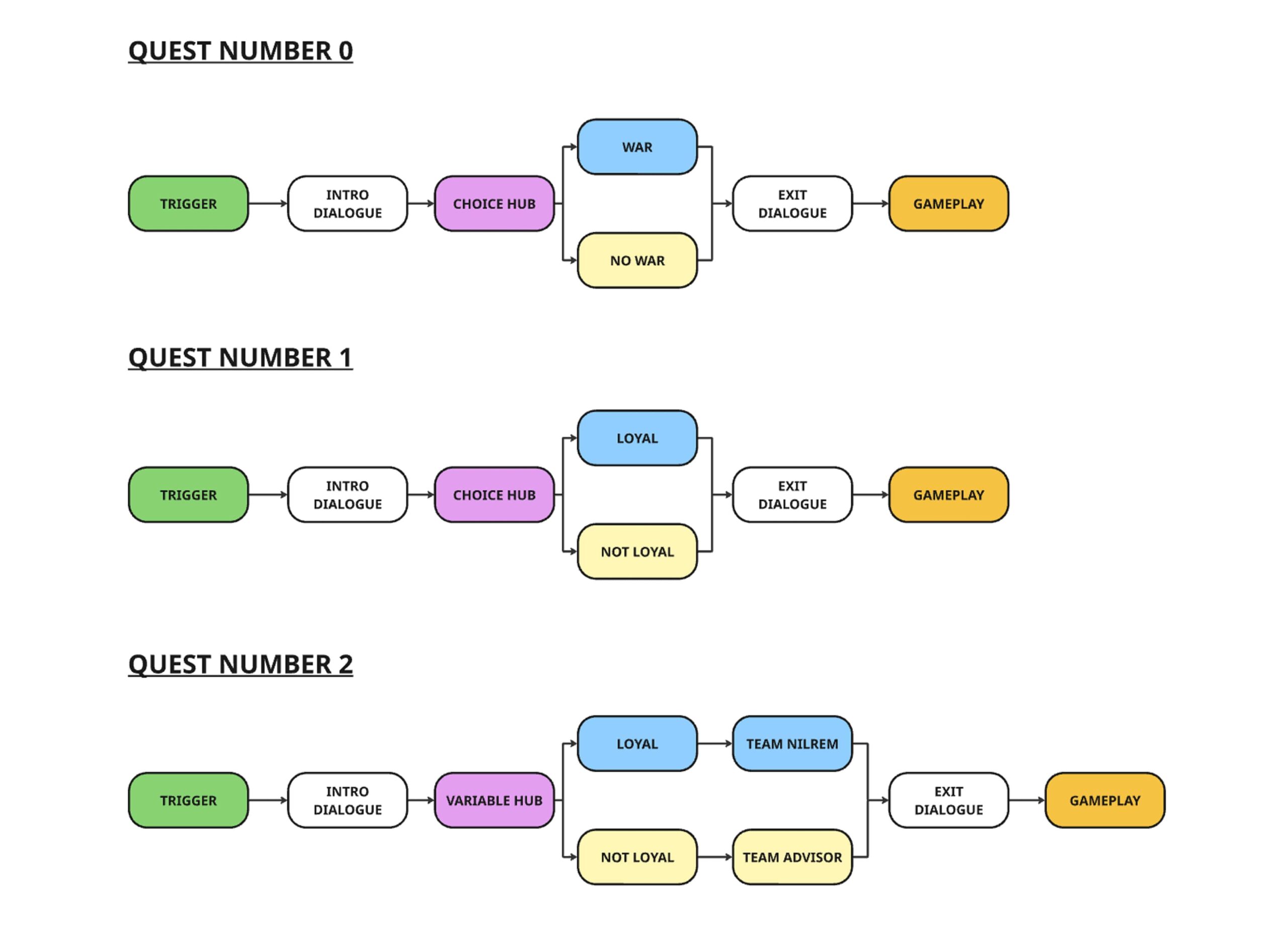
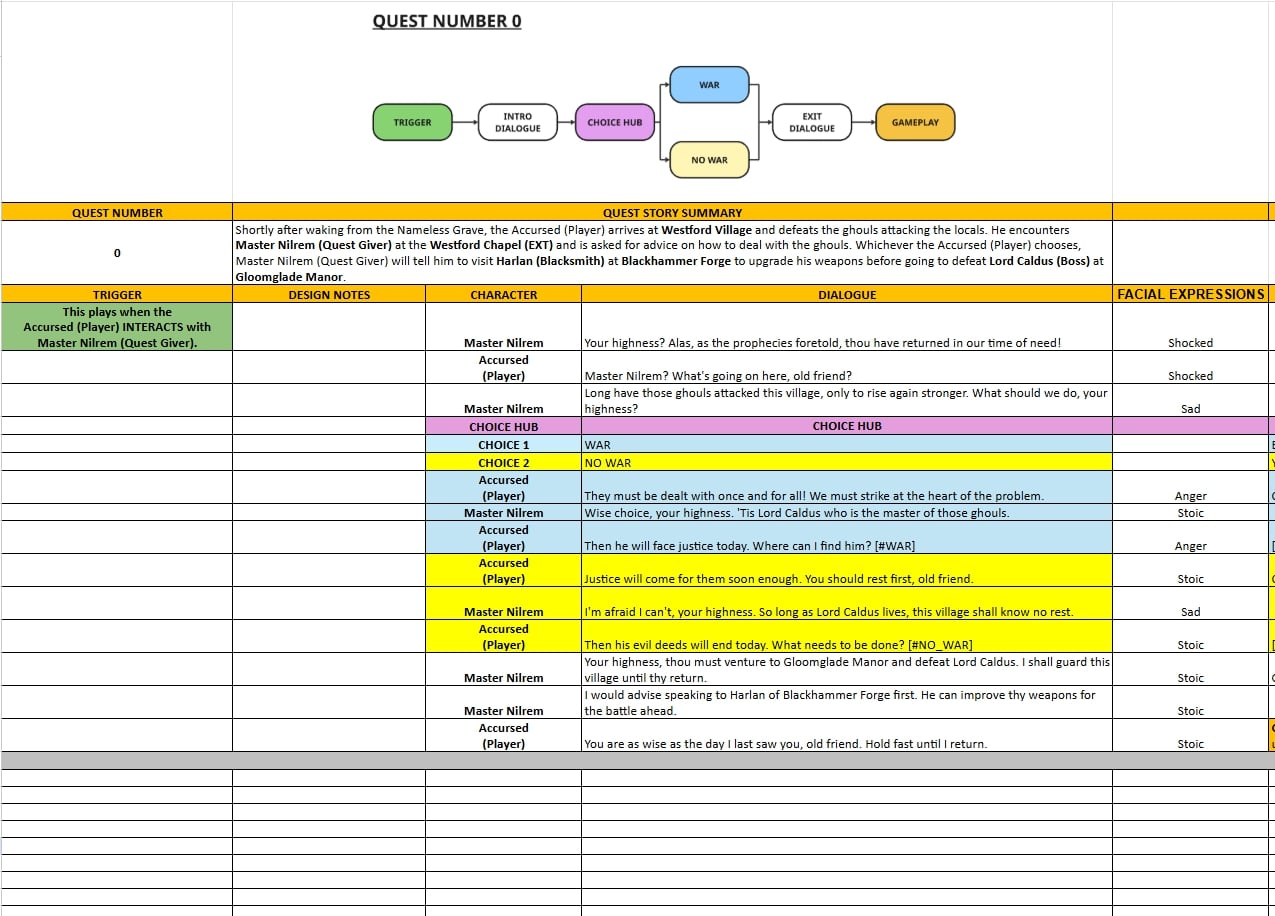
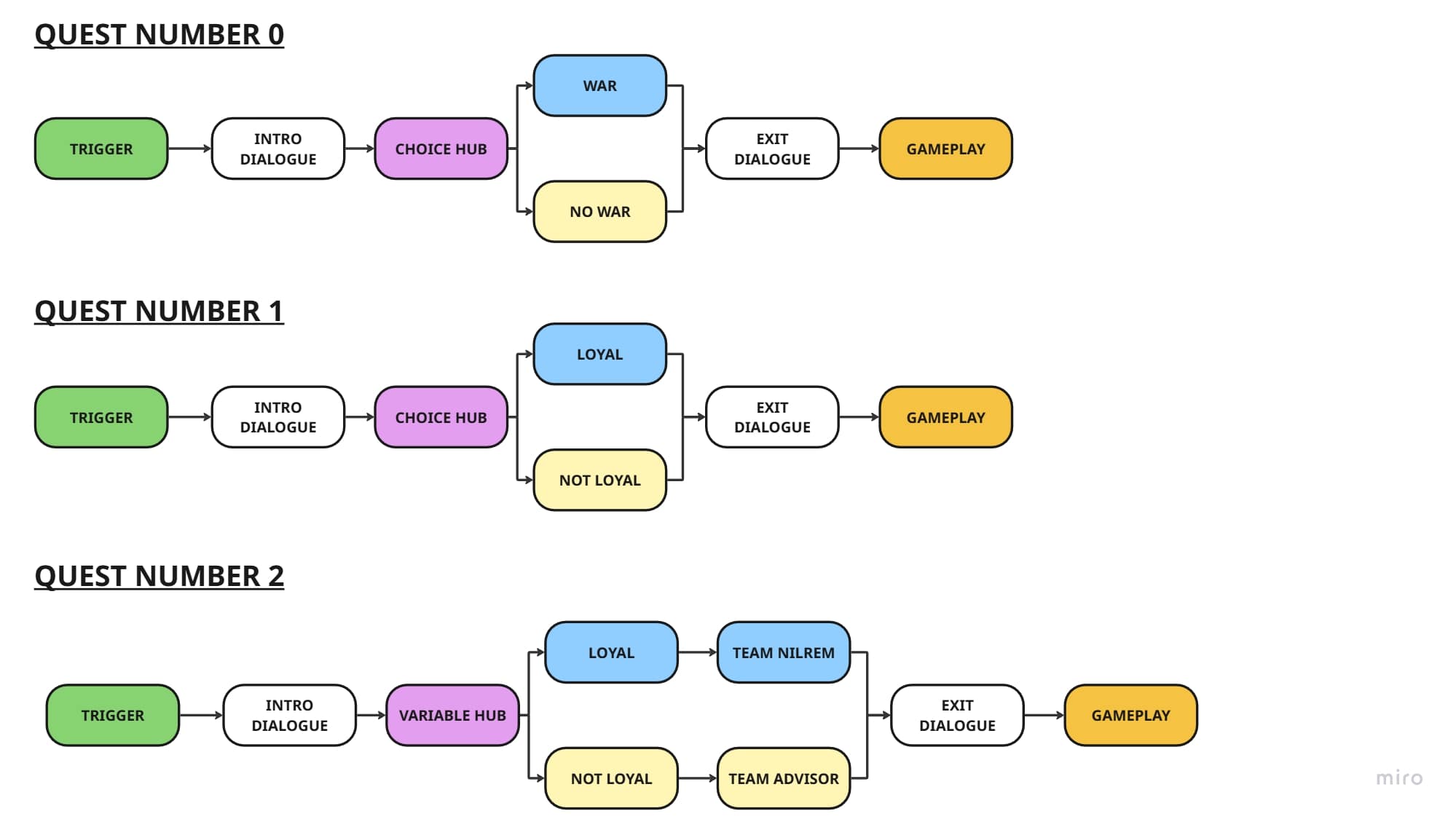
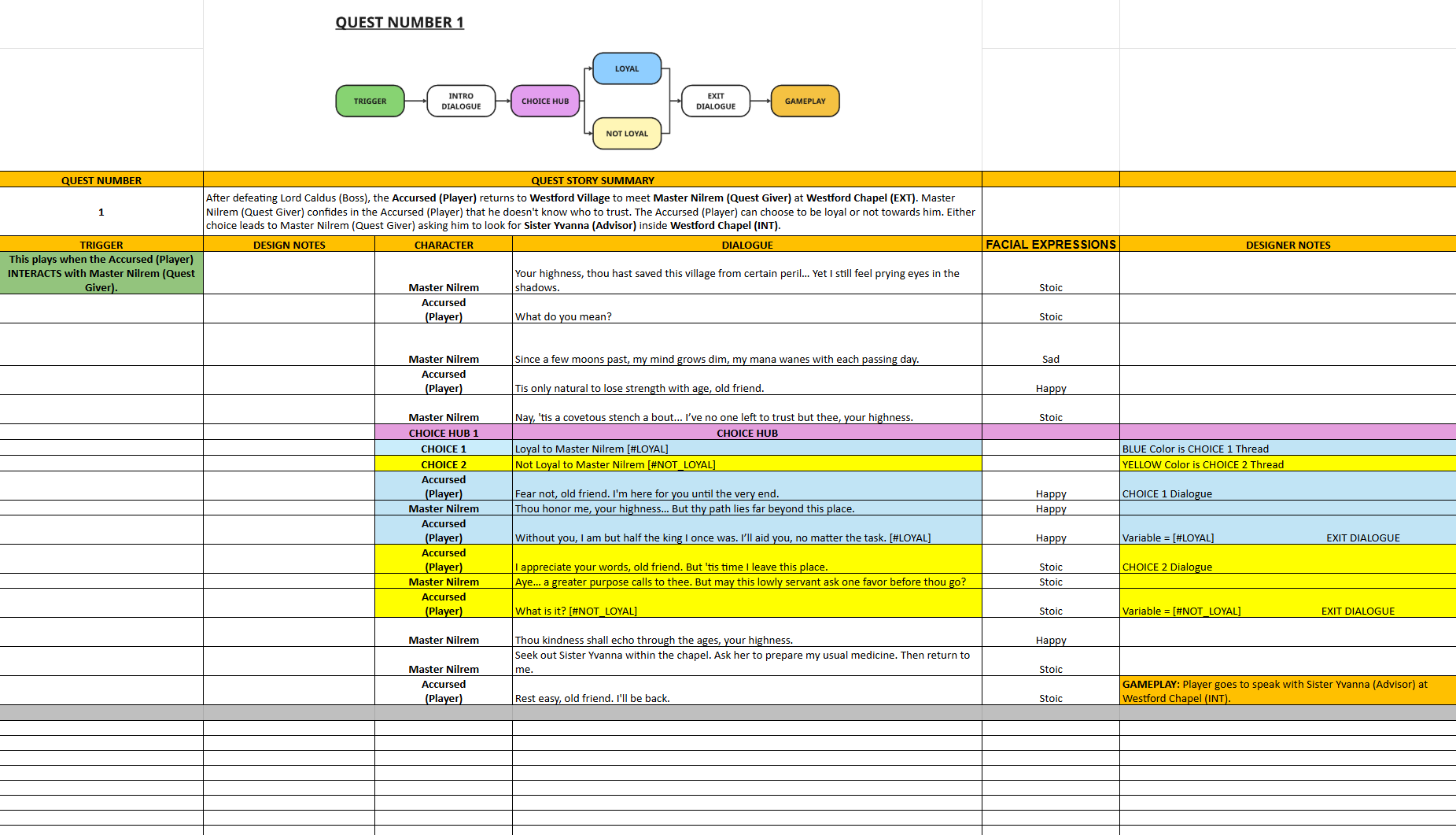
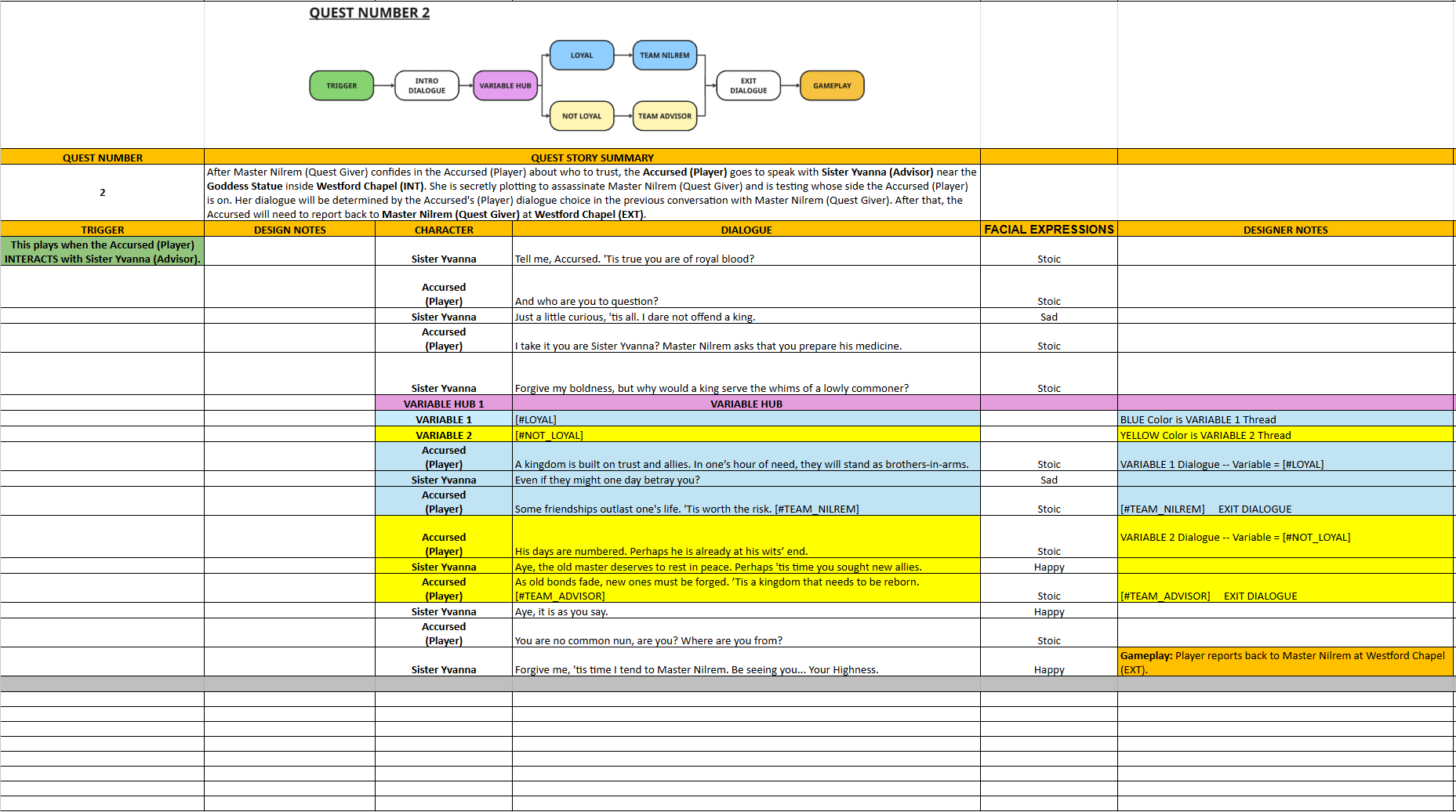
Designed Quest Branching Dialogue
Quest Branching Dialogue Creation Process:
Step 1: Designed branching dialogue threads that integrated variables and choices seamlessly into the gameplay:
Included the following design considerations:
- Roleplay choice HUB – Allows the player to respond to the NPC with choices that best suit their playstyle
- Tutorial Quest – As this quest is still part of the tutorial, there are no quest acceptance hubs.
- Polarized Choices – Polar opposite choices to cater to the various player types.
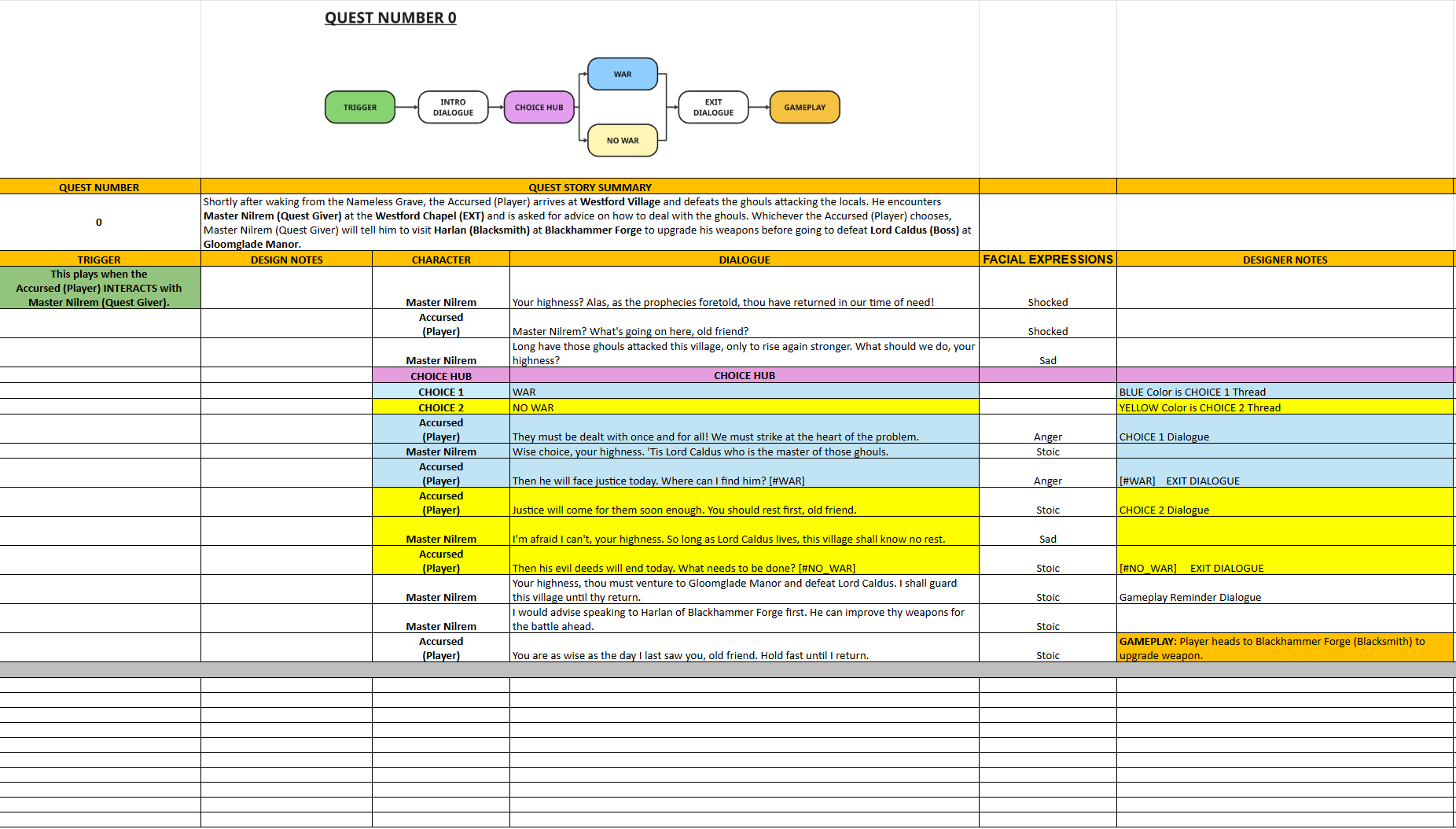
Step 2: Wrote dynamic dialogue with thematic choices that respond to player actions:
- Simplicity & Meaningful Choices – Clearly present the Quest Giver NPC’s trust towards the player character, allowing the player’s choice to hold weight when choosing between polarizing choices.
- Urgent Stakes – Ensured clarity and narrative urgency of each questline with tight and informative dialogues that quickly led to gameplay.
Step 3: Simulated the narrative flow of the questlines by prototyping the branching dialogues in Arcweave with the following goals:
- Optimize player tap/clicks – Through an interactable prototype, the script can be felt and further revised to improve pacing.
- Live design space – Through Arcweave’s note function, design teams can quickly leave feedback and collaboration notes.
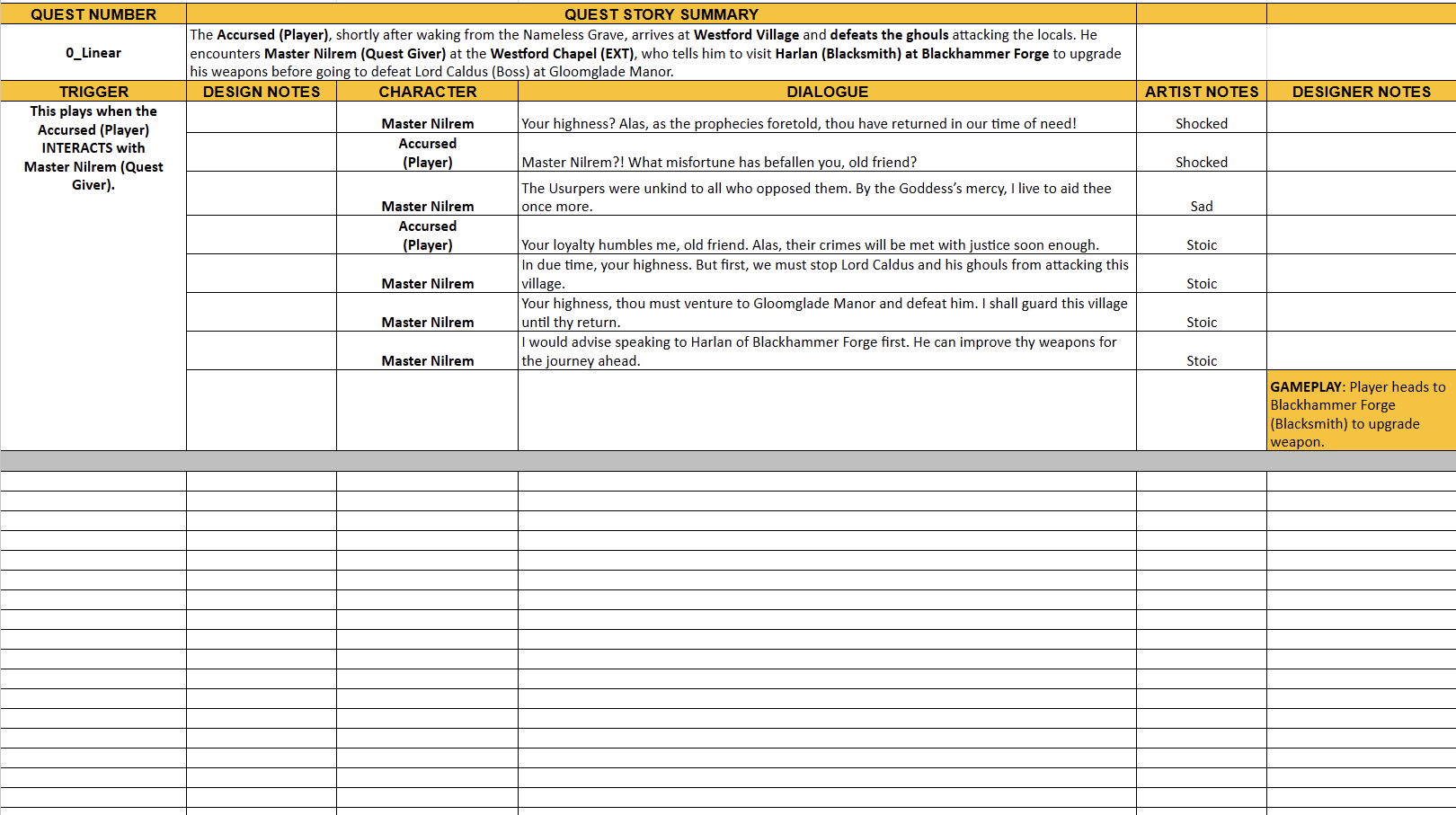
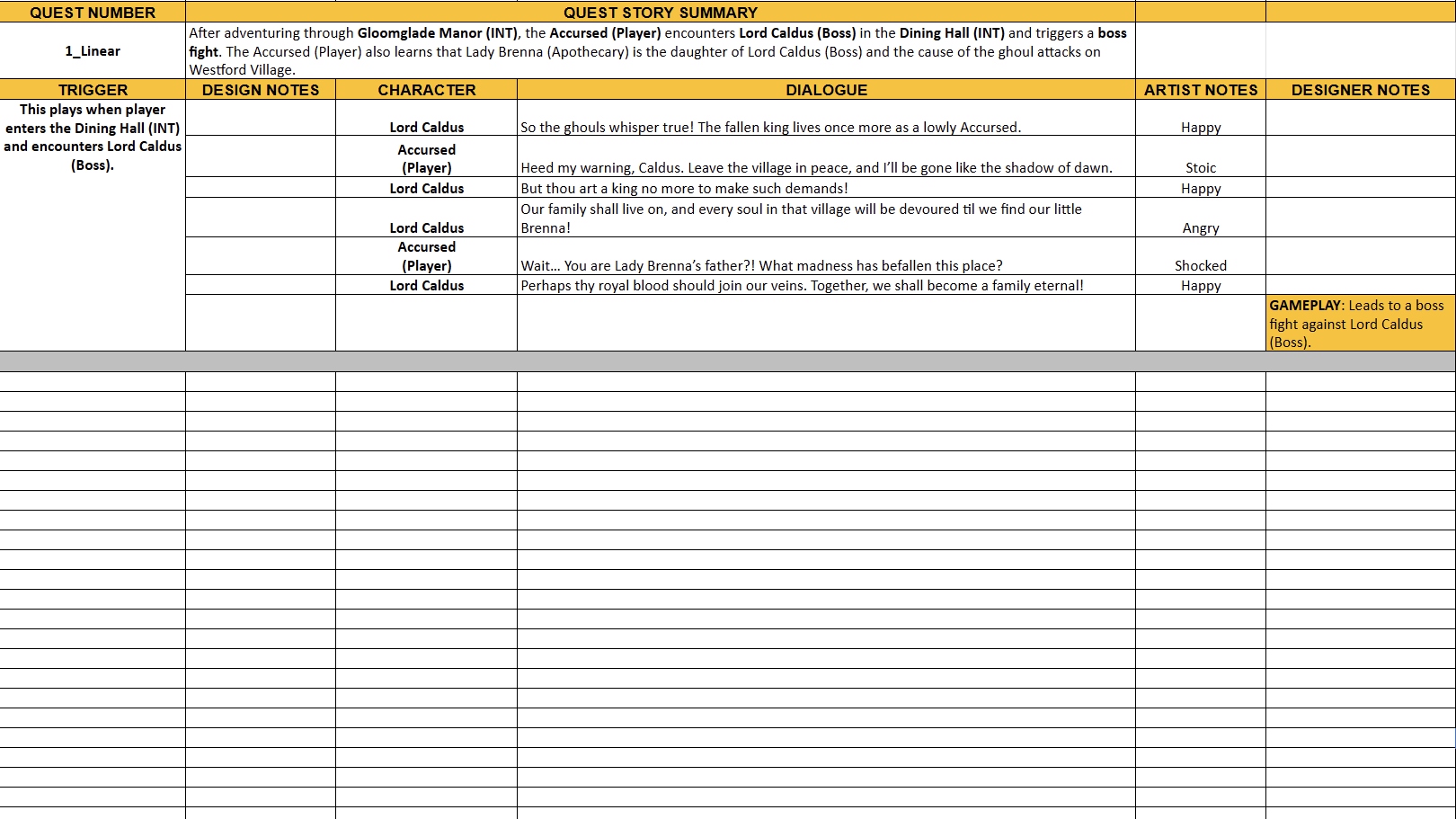
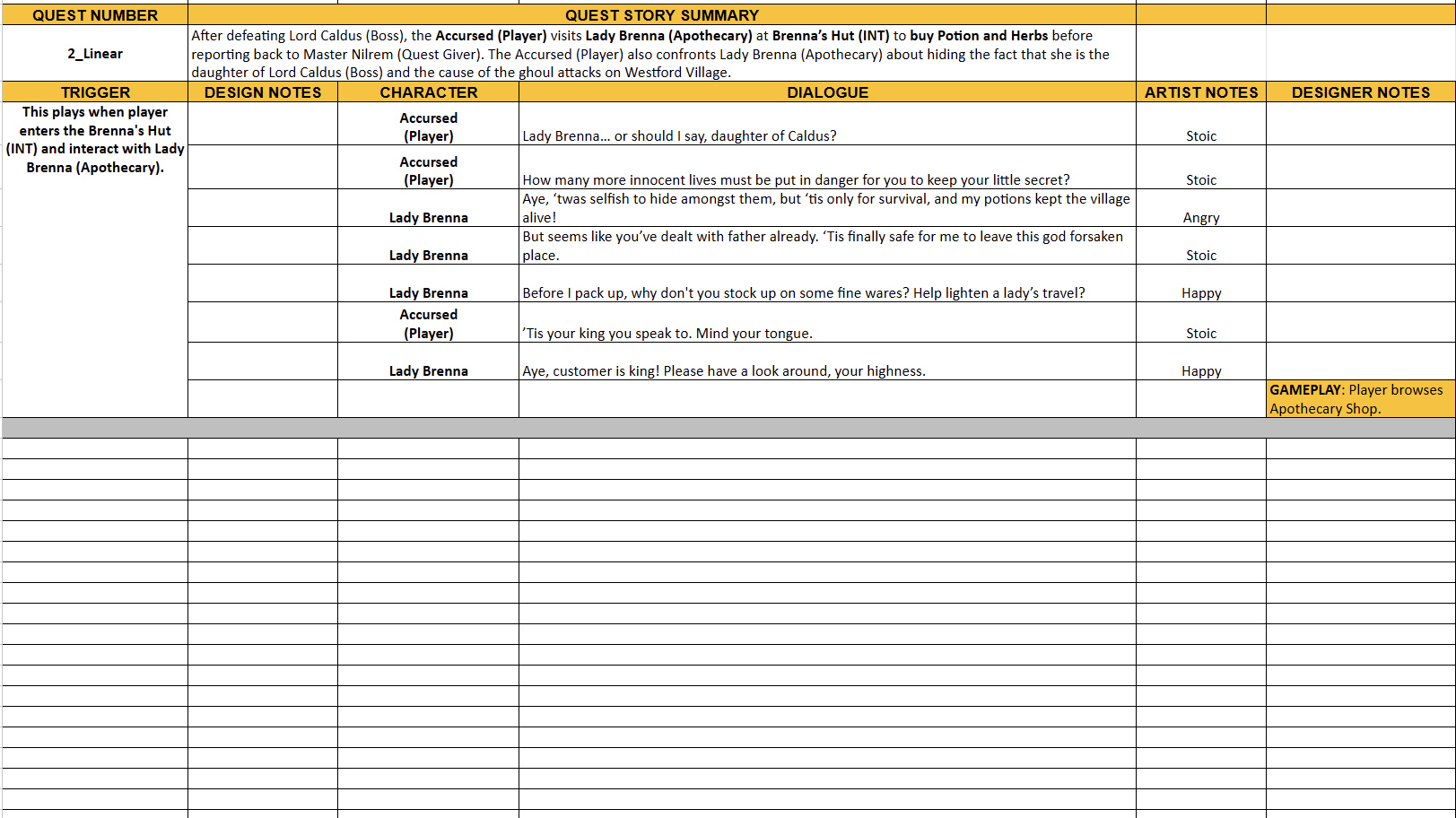
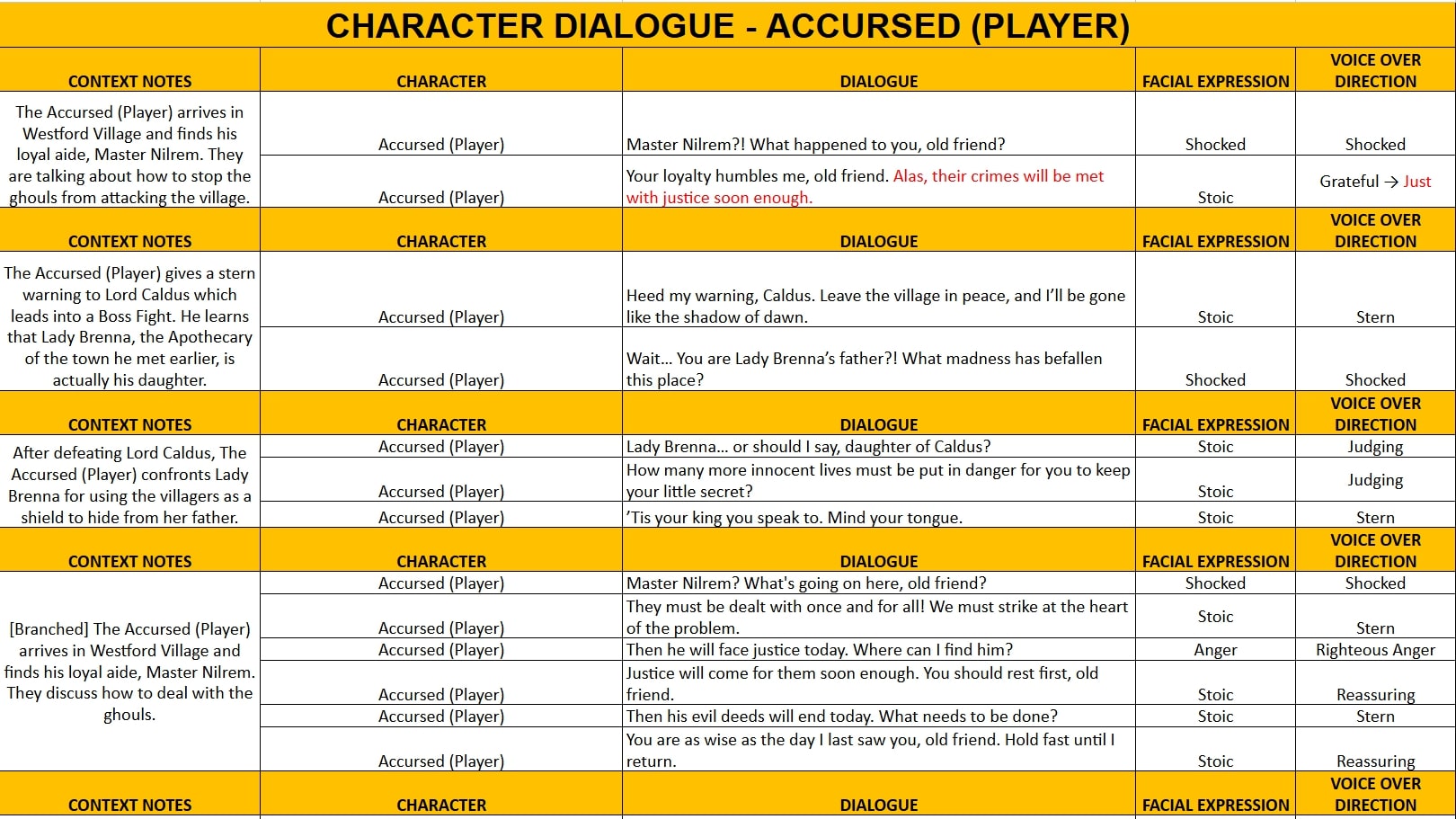
Designed Quest Linear Dialogue
Designed linear dialogue threads to proof story to gameplay functionality with the following design considerations:
- Gameplay Needs – As part of the tutorial section, this interaction was designed to:
- Raise tension by revealing a great threat to give narrative context and stakes to the Head to Blacksmith & Defeat Lord Caldus (Boss) gameplay.
- Organically introduce new NPCs using dialogues that showcase their personalities and gameplay purposes to the player.
- Clear goals – As part of the tutorial section, these interactions were designed to convey simple, clear goals framed by narrative lore.
- Character Voice – Ensured all characters had strong and unique voices to increase immersion by:
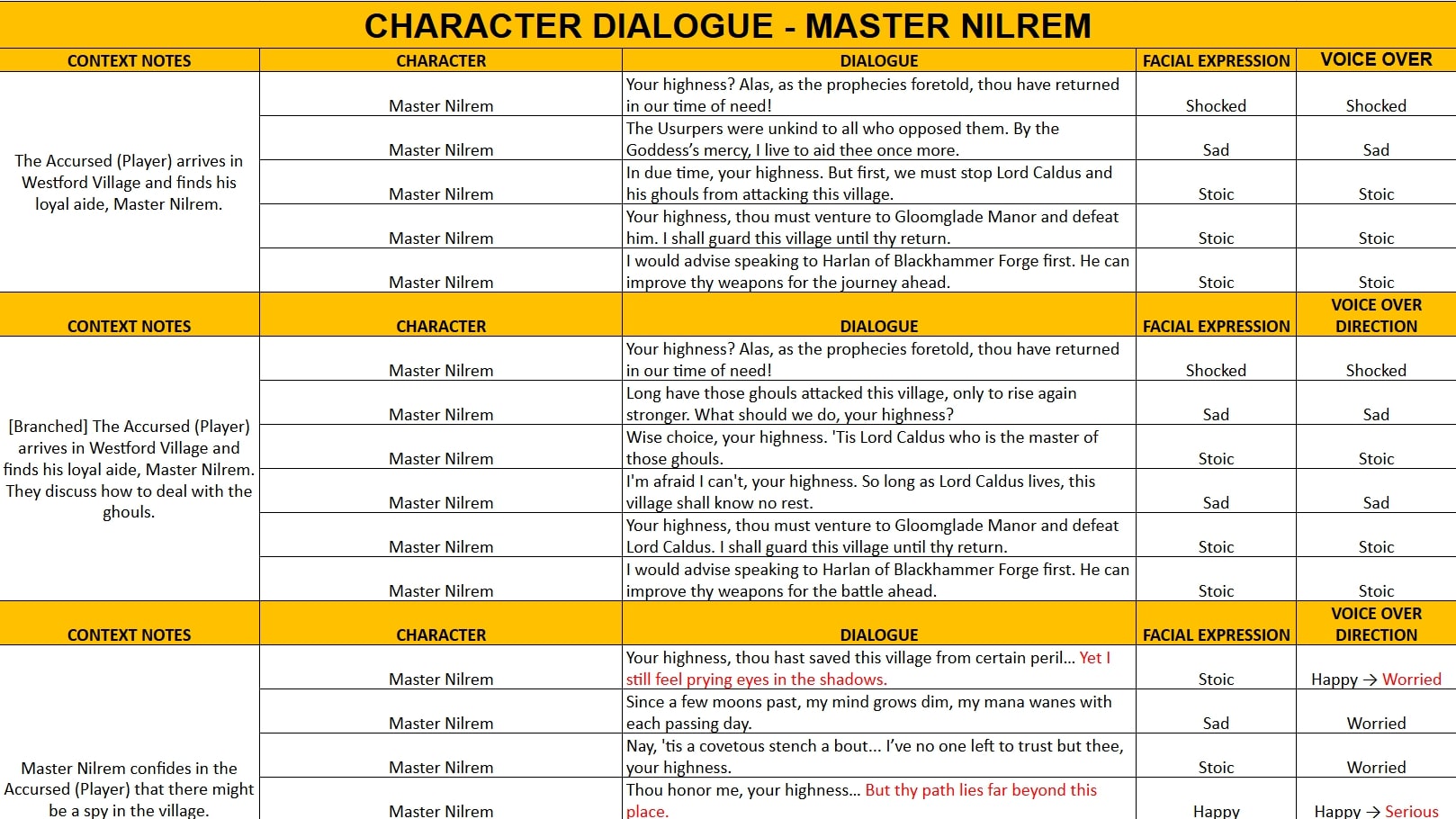
- Quest Giver NPC – The only character to show respect towards the player character and has knowledge of the real threat.
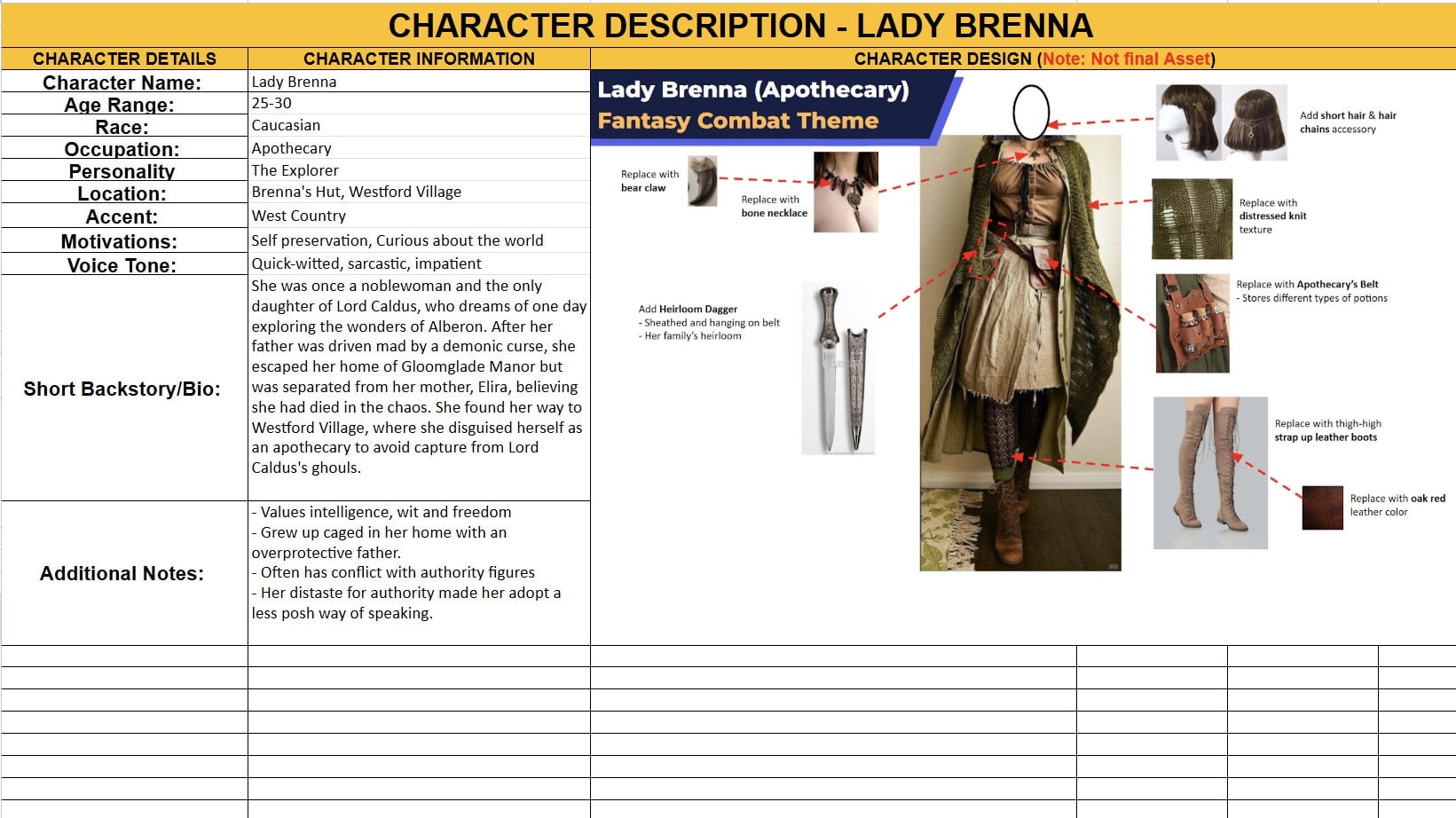
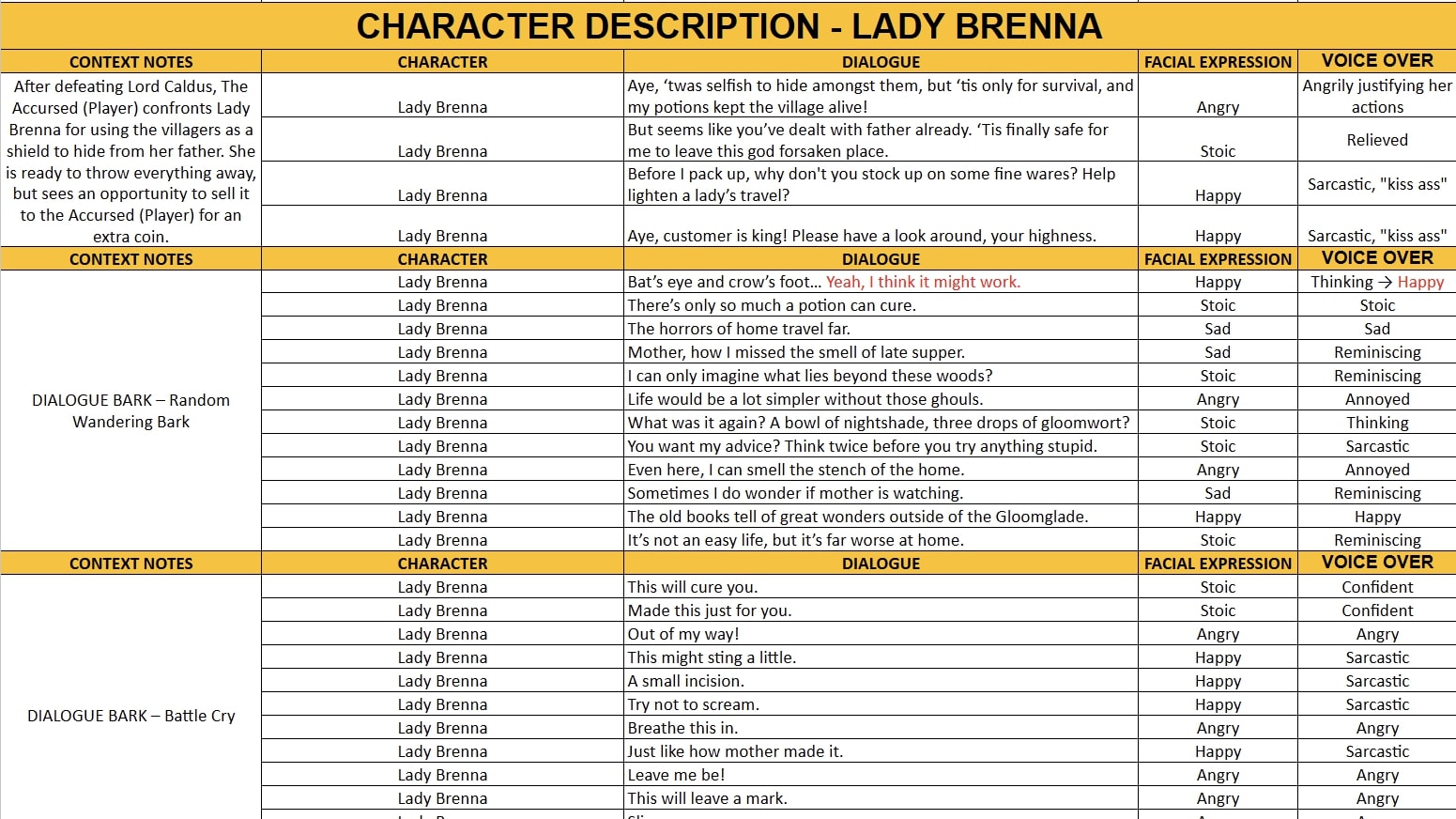
- Apothecary NPC – She was discovered to be hiding crucial information from the player and responds sarcastically to deflect guilt and responsibility.
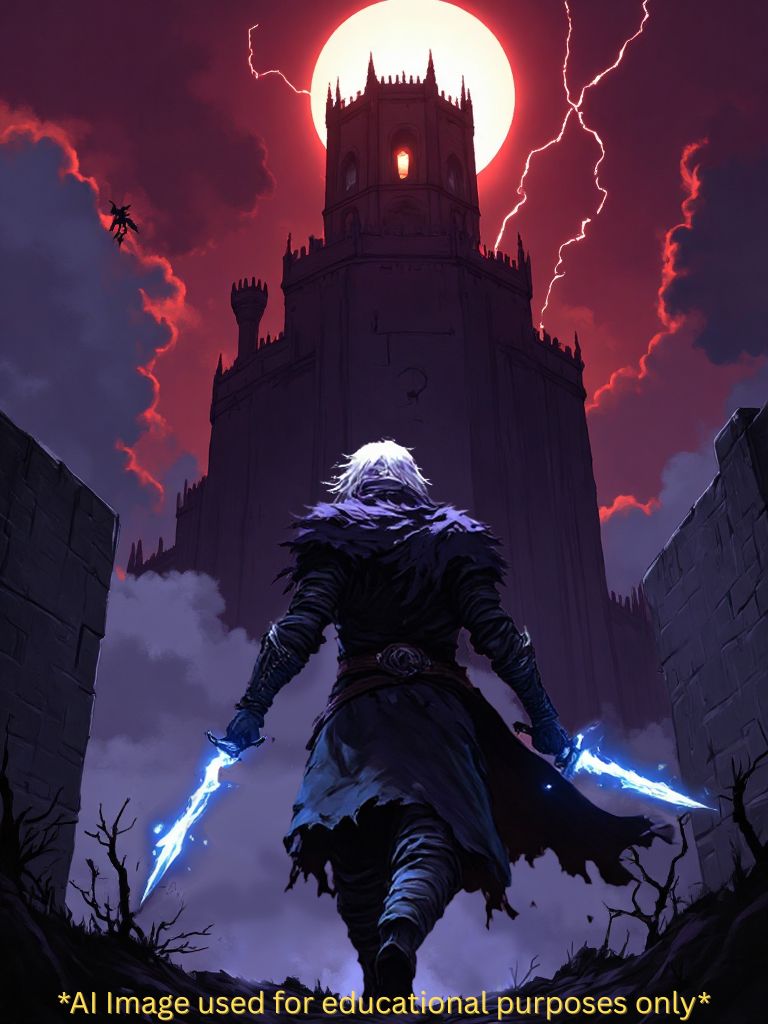
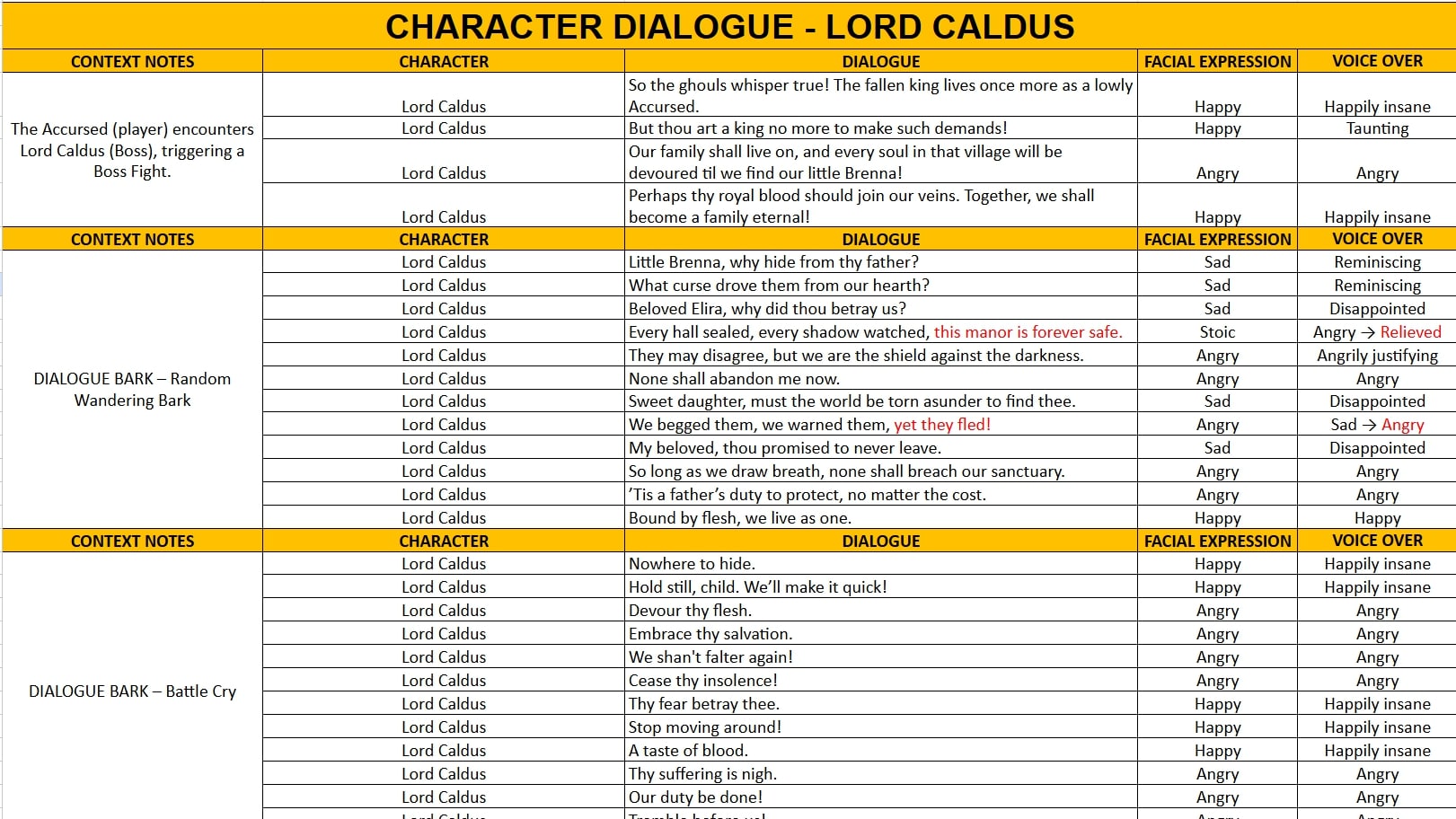
- Boss NPC – A clearly evil and sadistic character that knows the player character’s past. This is to reinforce the player’s motivation to defeat this character in battle.
Character Design & Barks
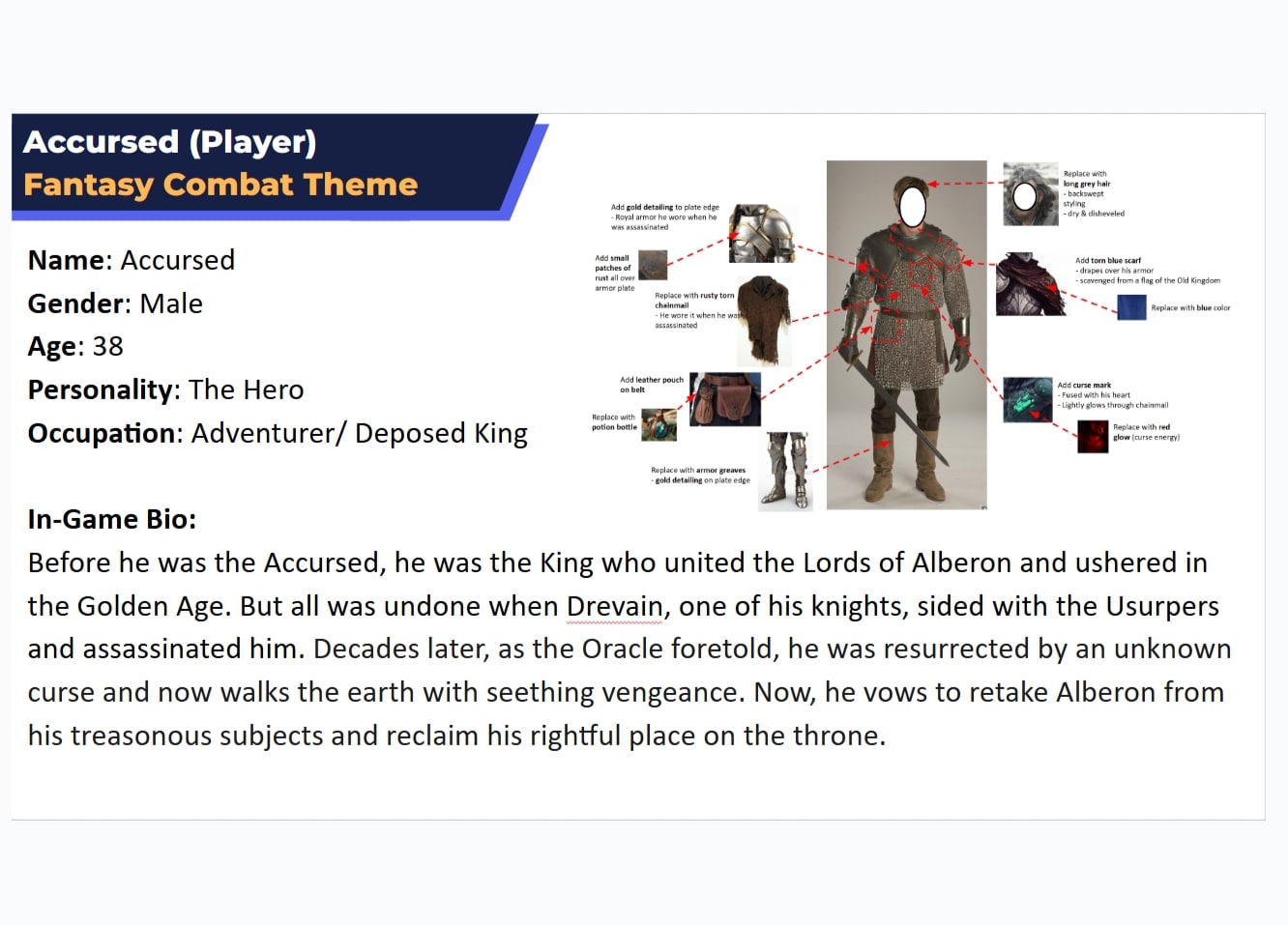
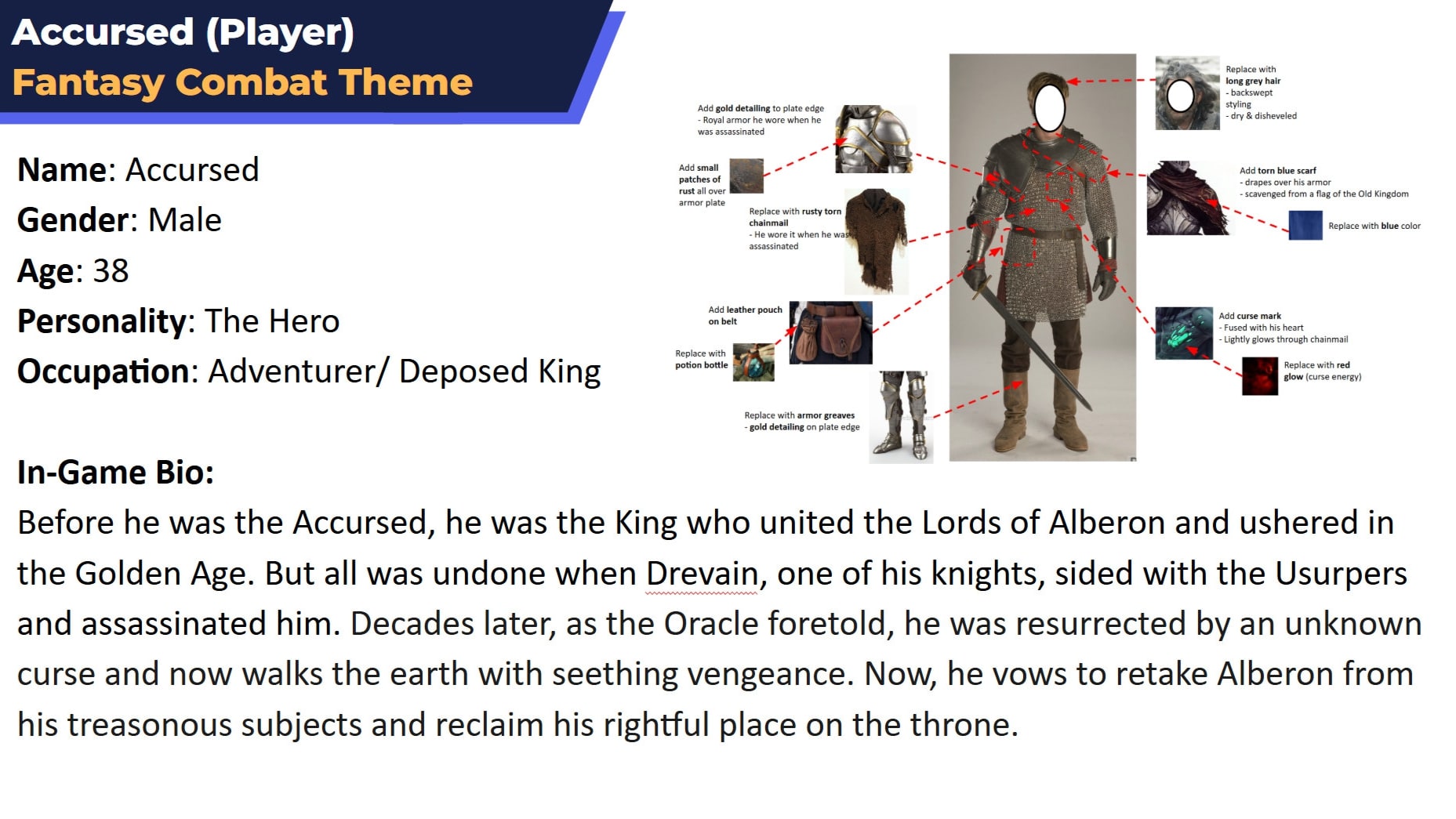
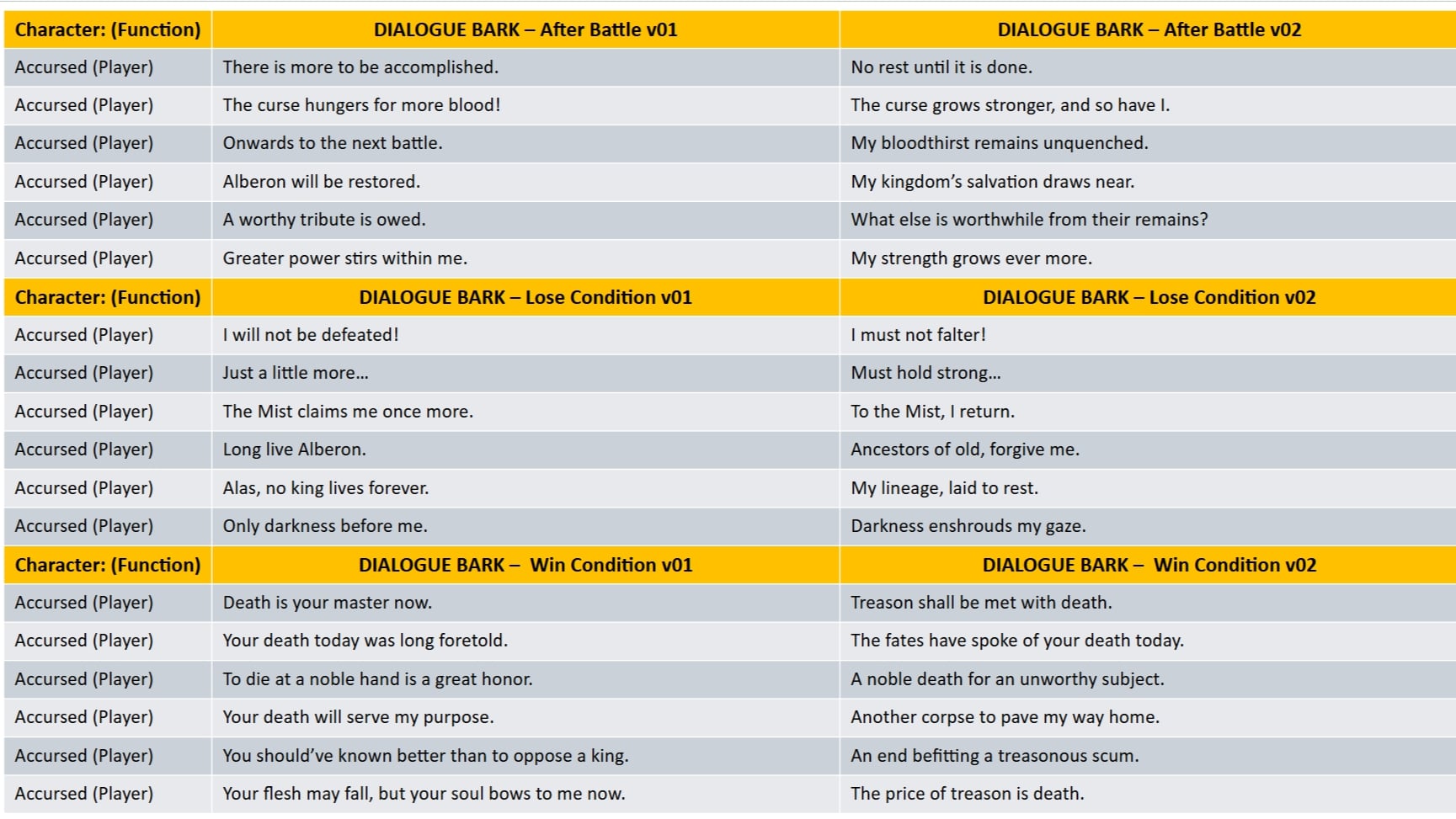
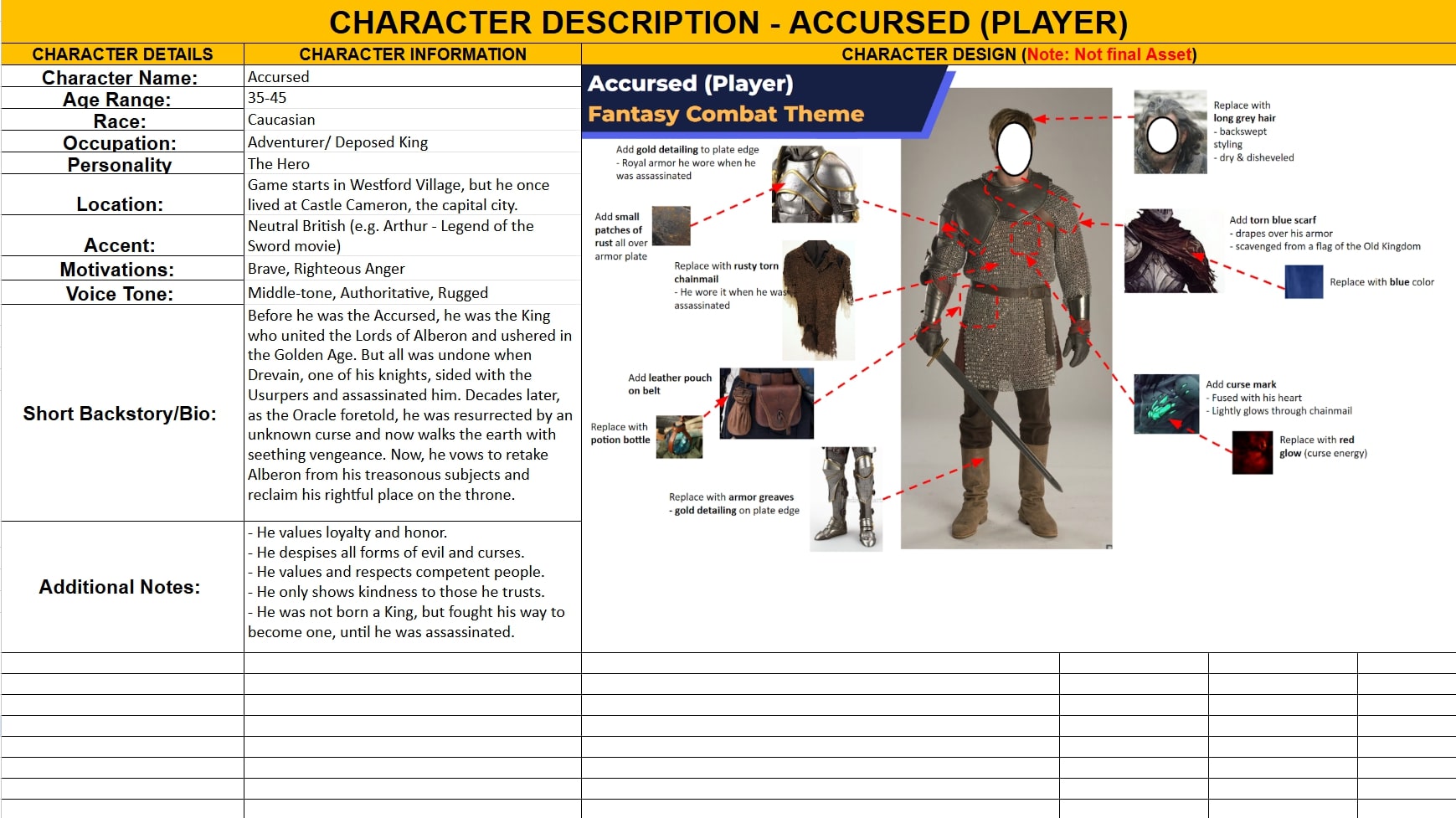
Player Character: The Accursed
Crafted a player character with motivations that conflict throughout the story, leading to dynamic choices that shape the player’s experience across various gameplay quests.
This is a general overall description of tasks and skills used to create the characters (not unique to a specific character):
- Researched, designed, and fleshed out character motivations and personality to reflect narrative themes, combat functions, and game mechanics
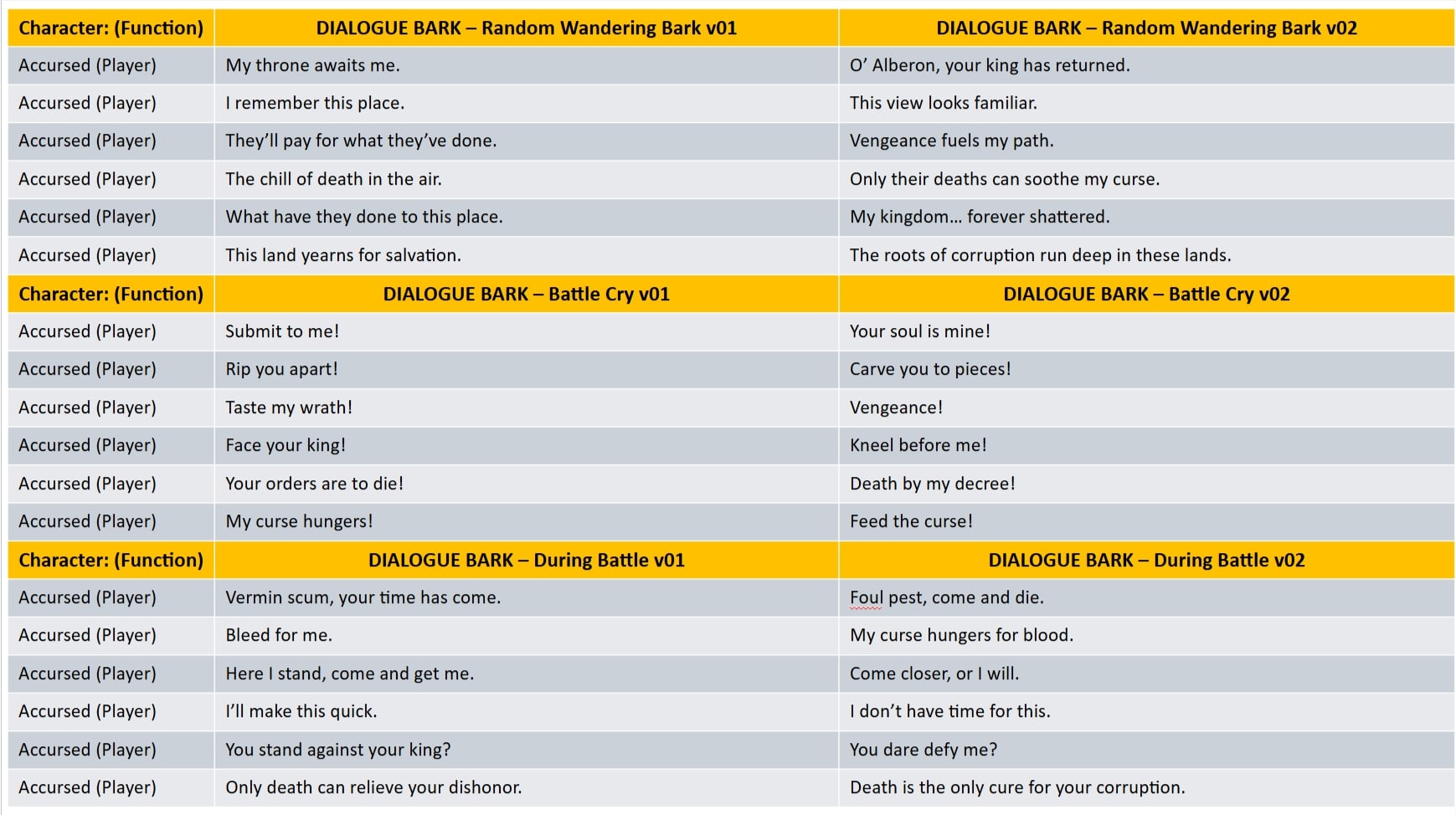
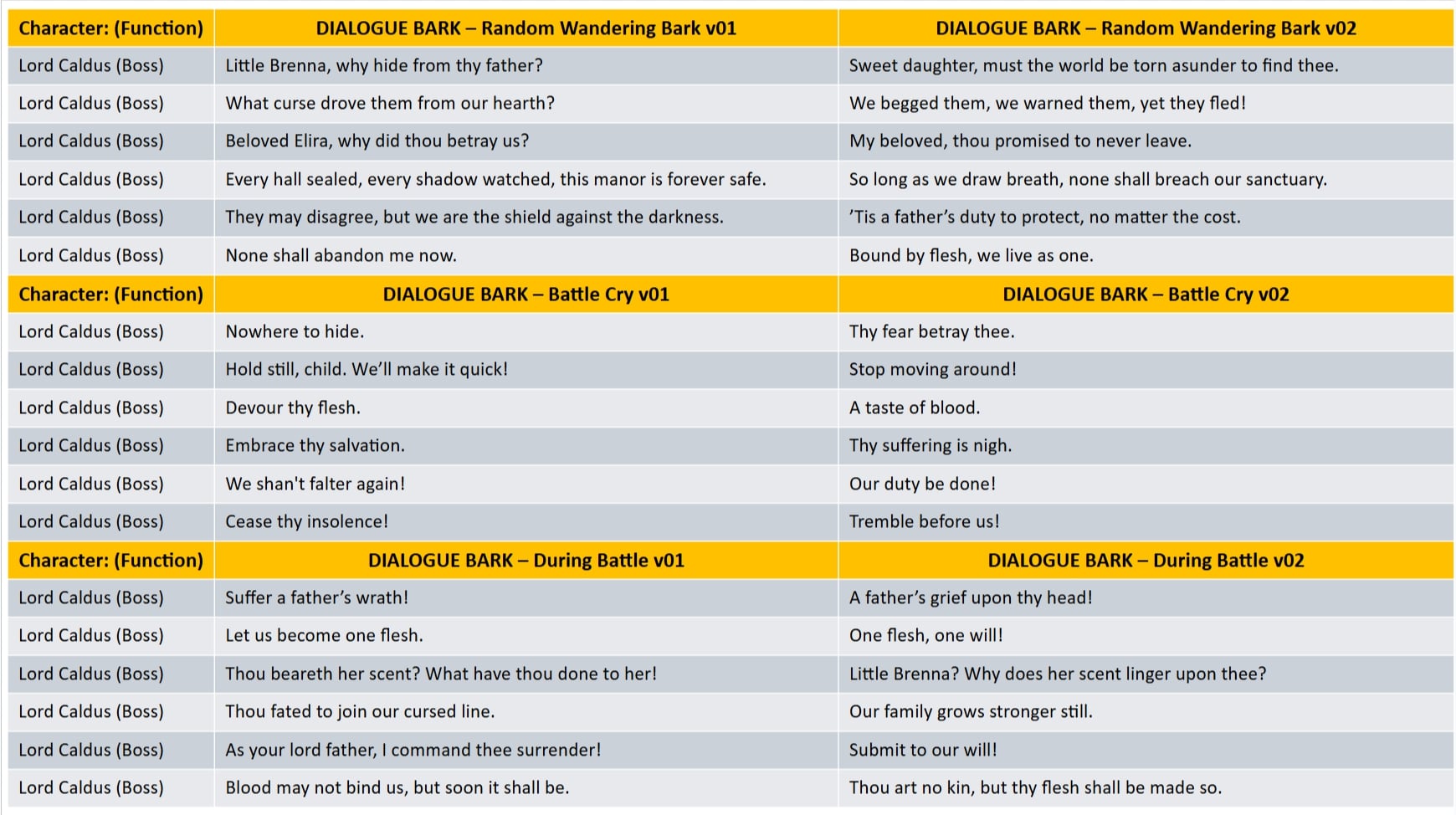
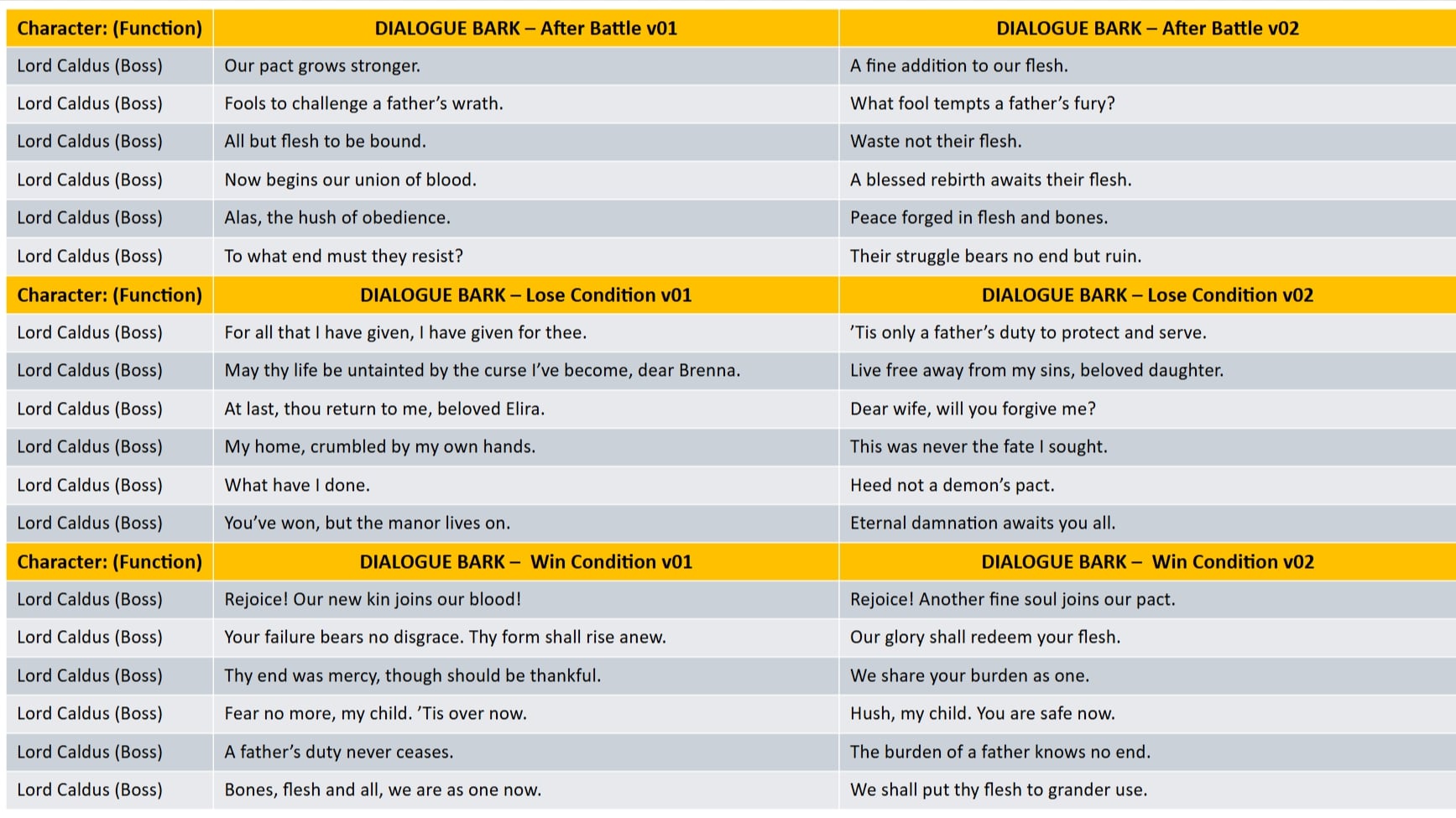
- Wrote the character bio and gameplay barks using their design, combat function, and Jungian personality archetypes in mind.
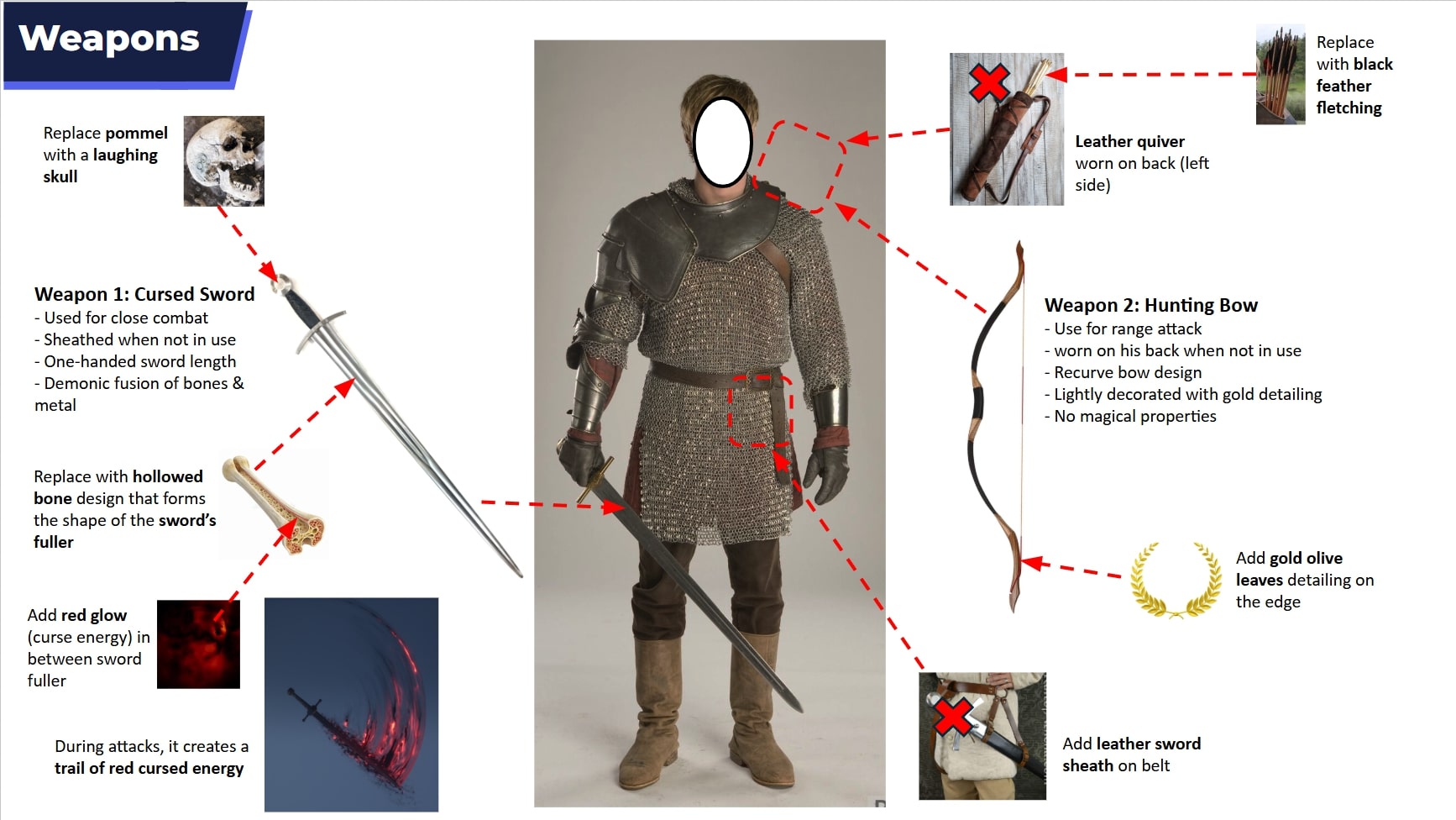
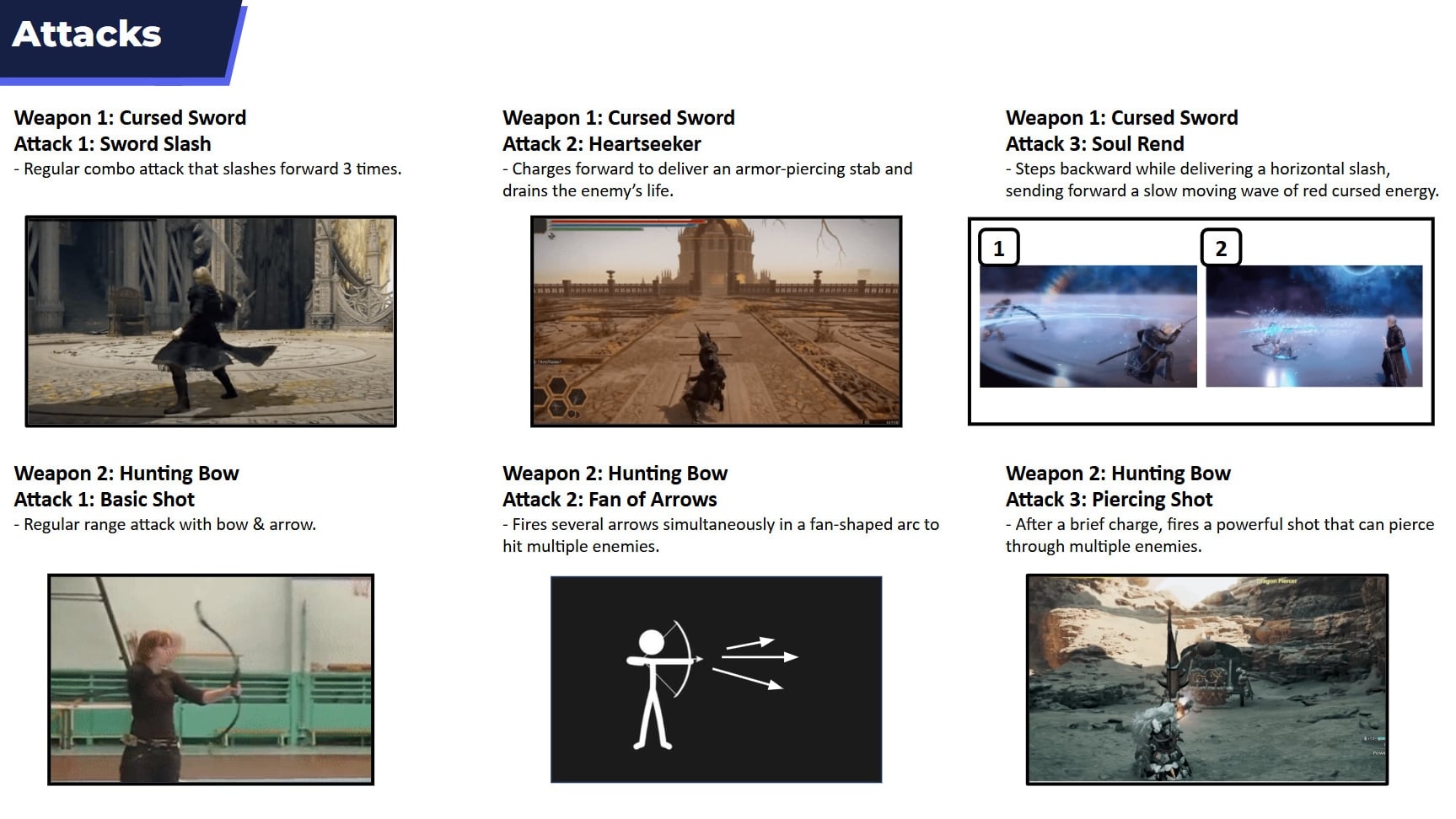
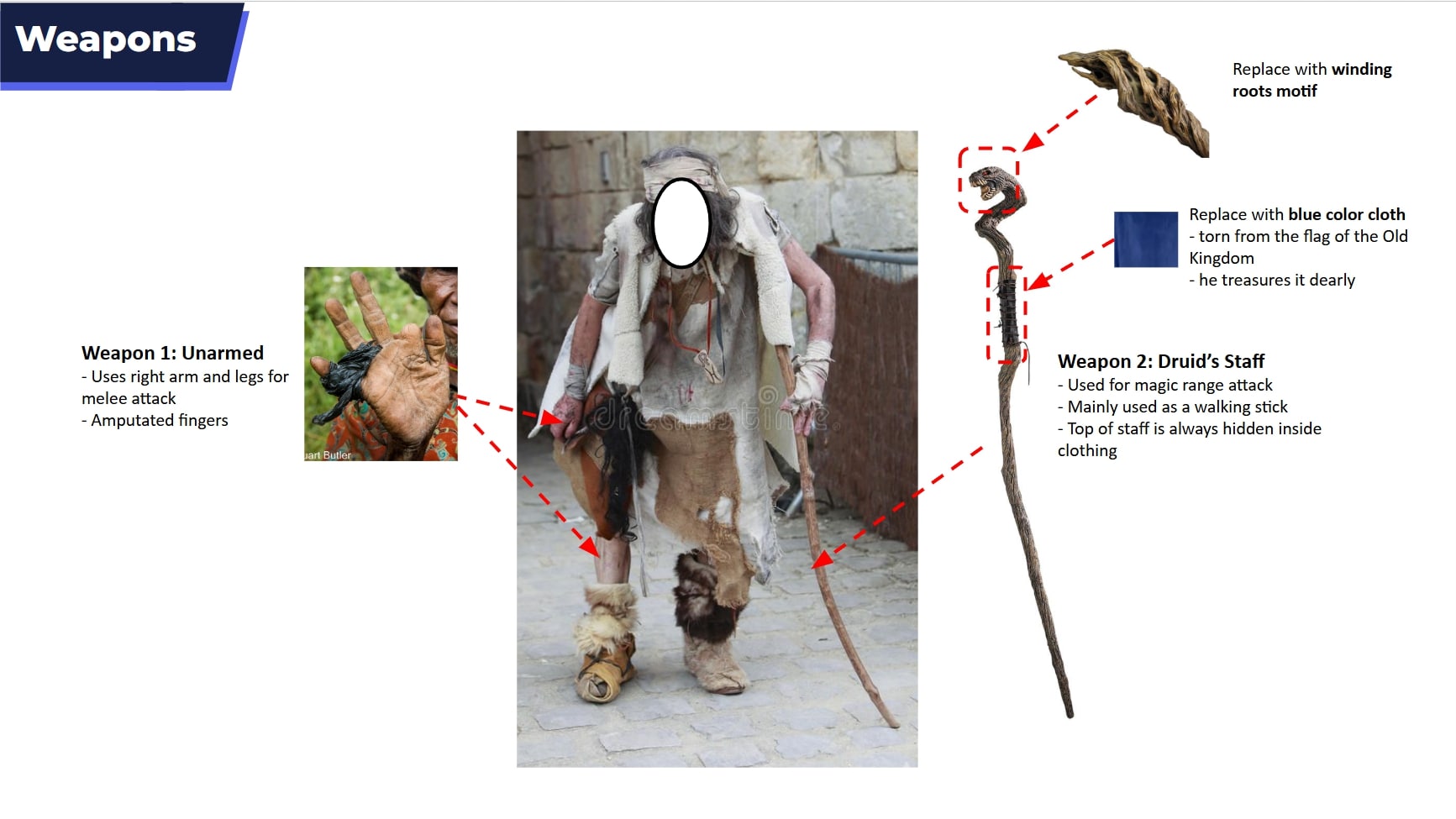
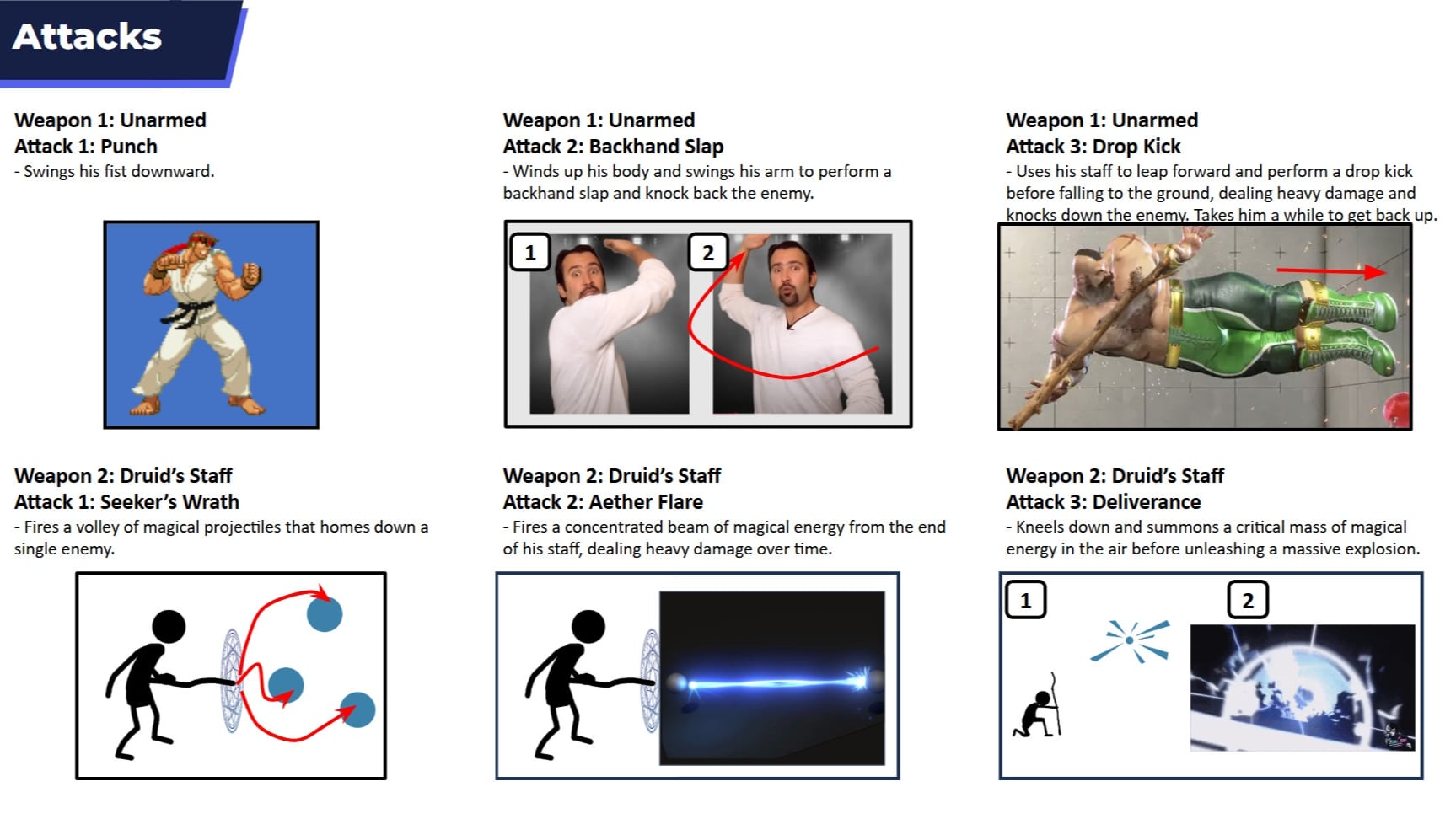
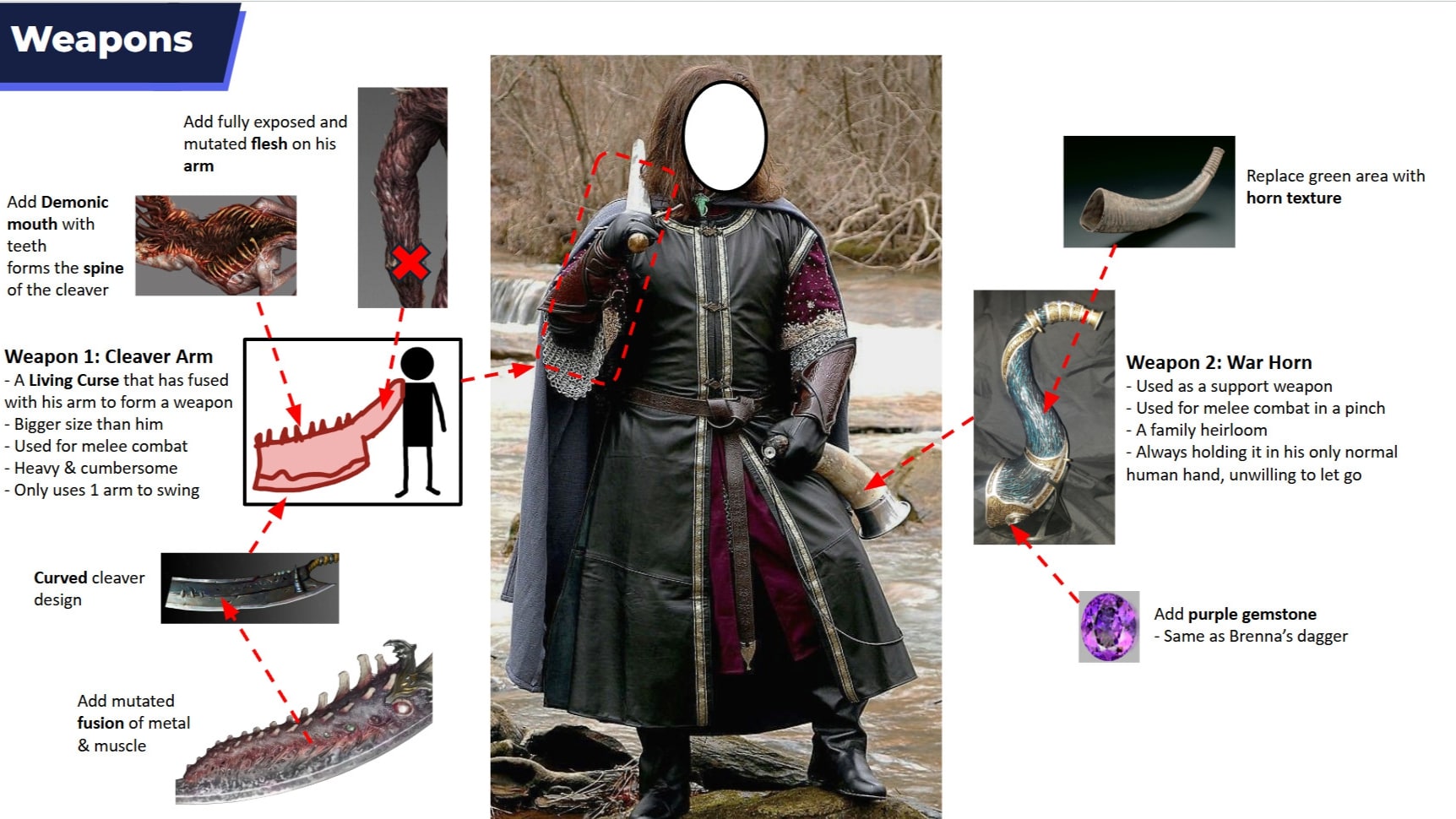
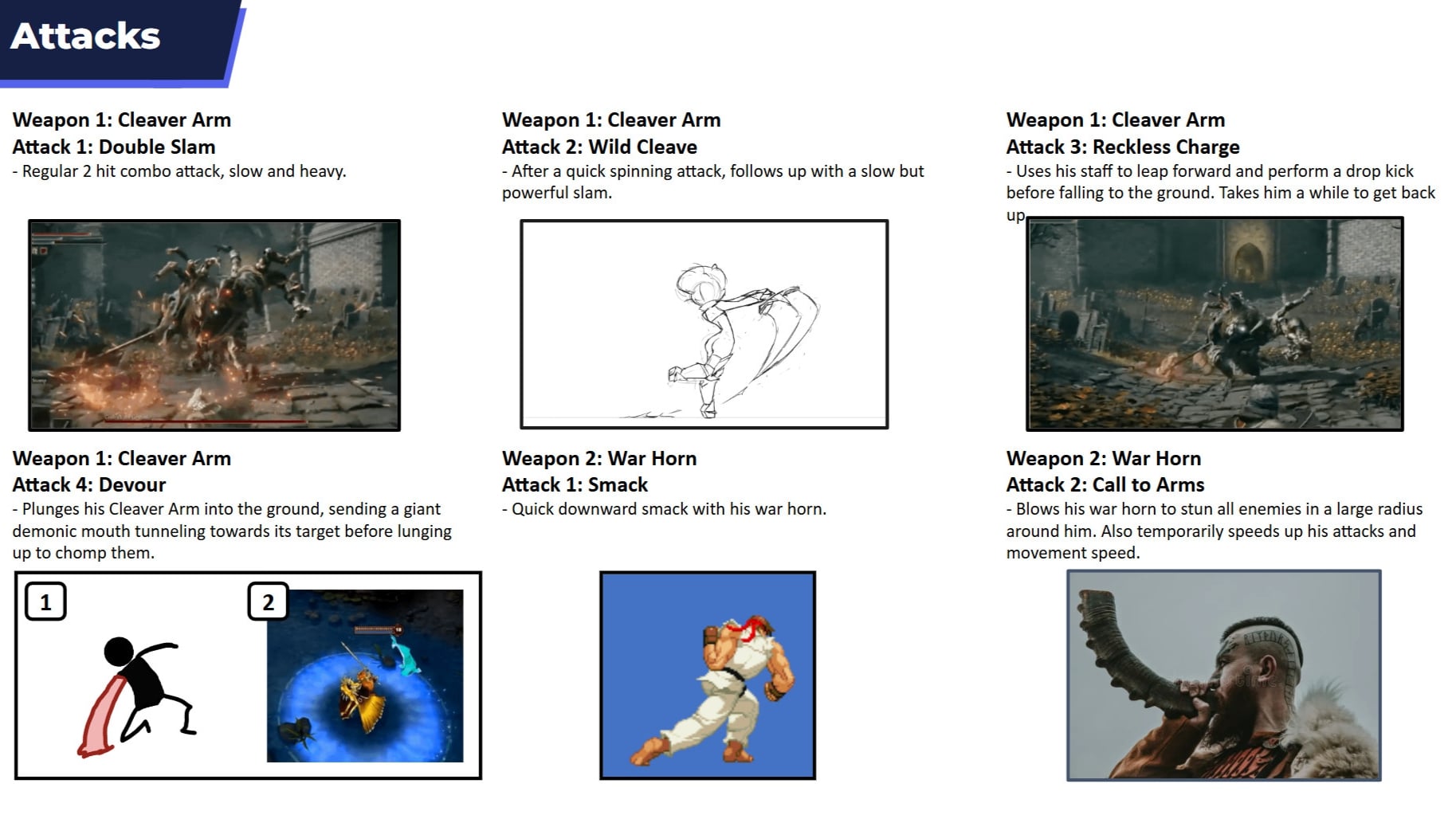
- Supported the combat designer by designing unique weapons and attacks for each character, as well as naming and describing their attacks
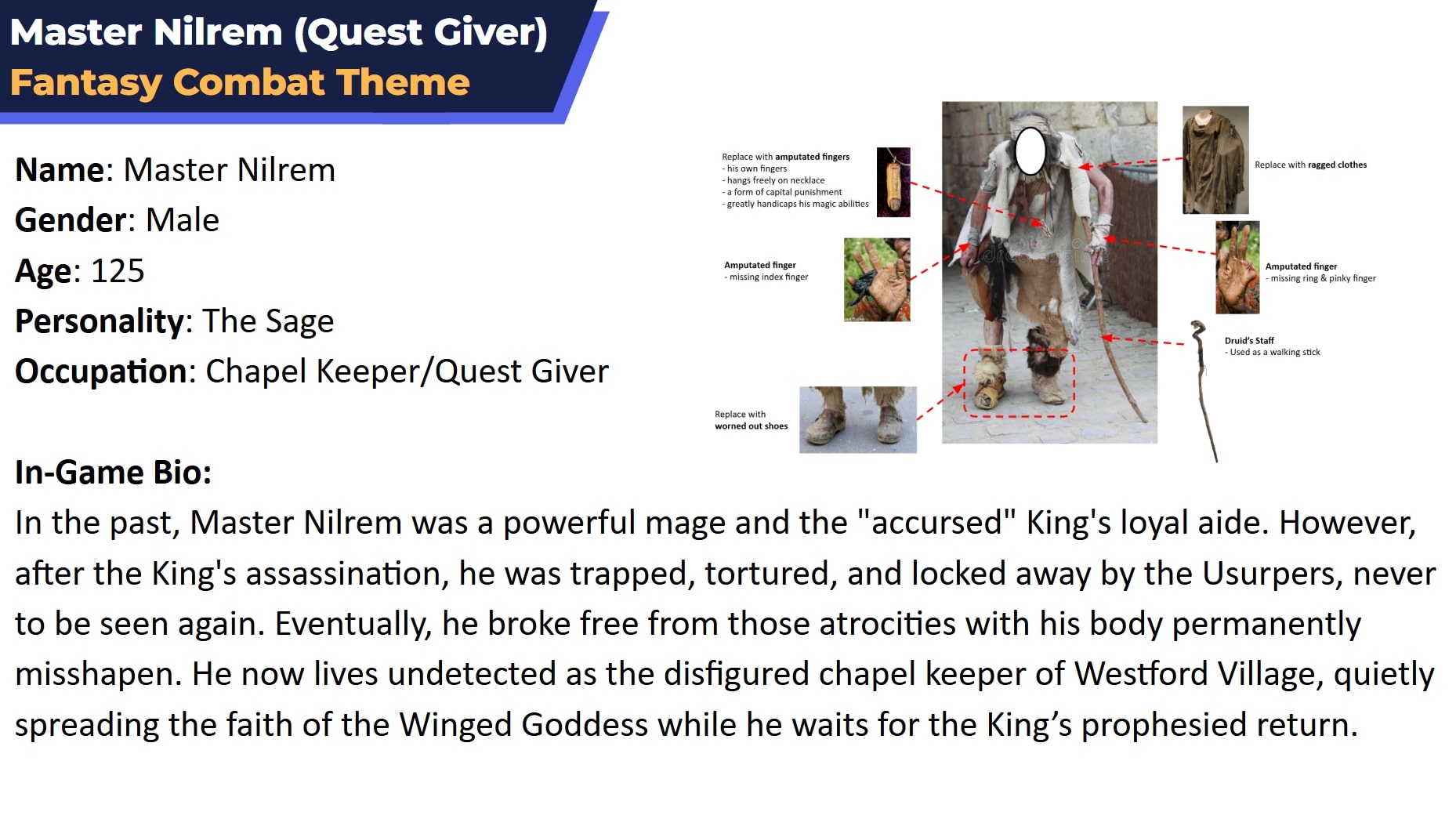
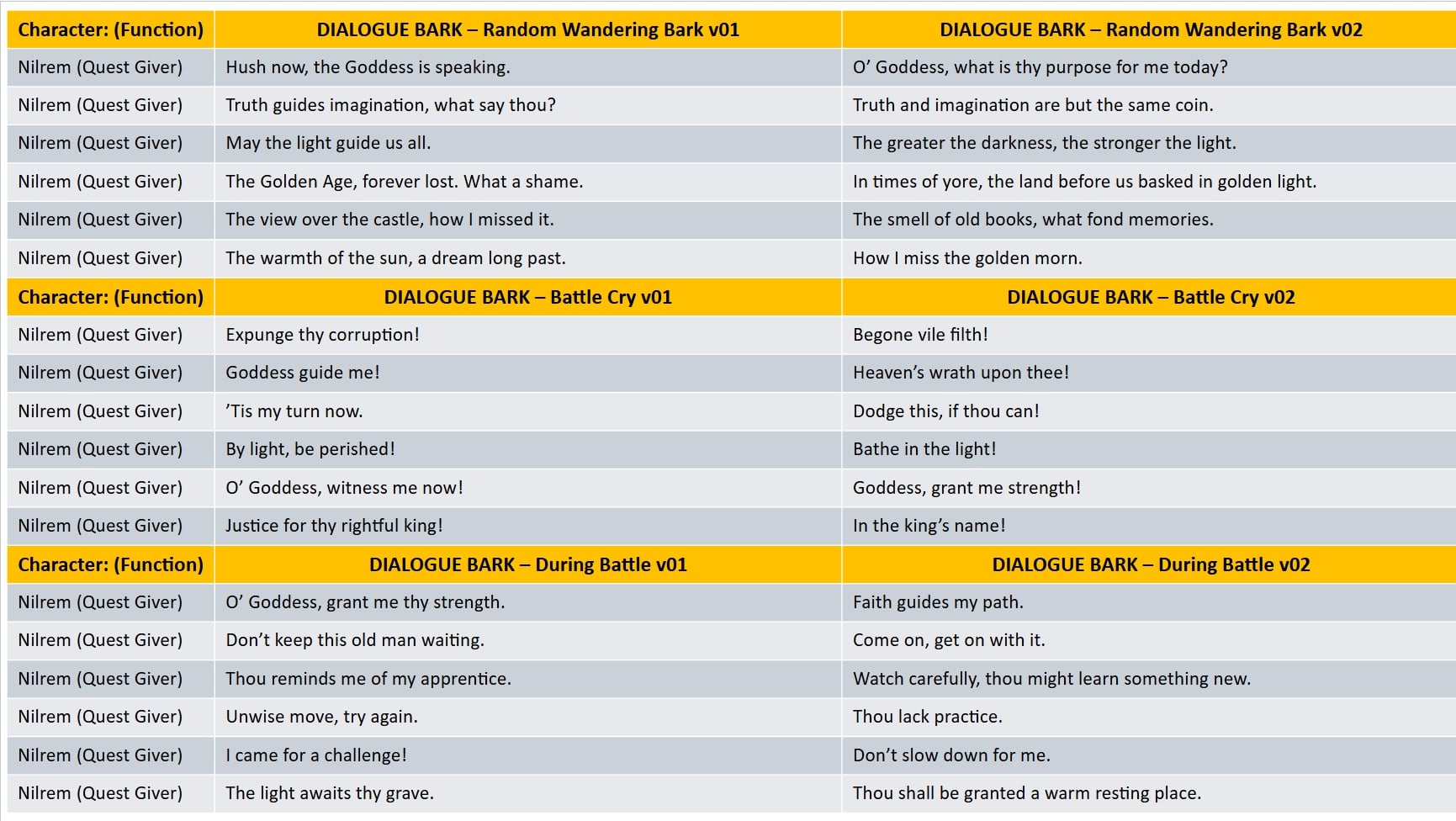
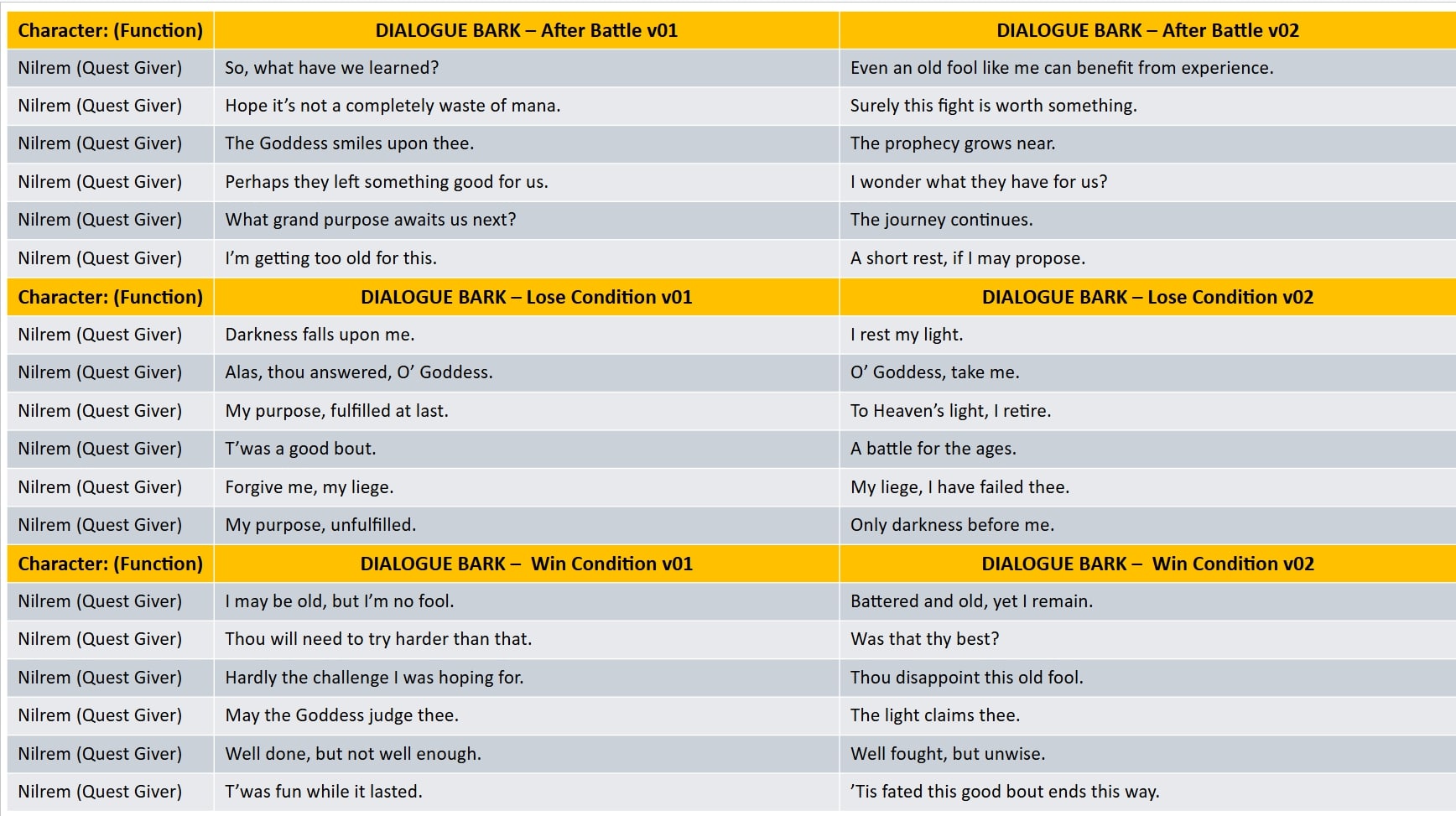
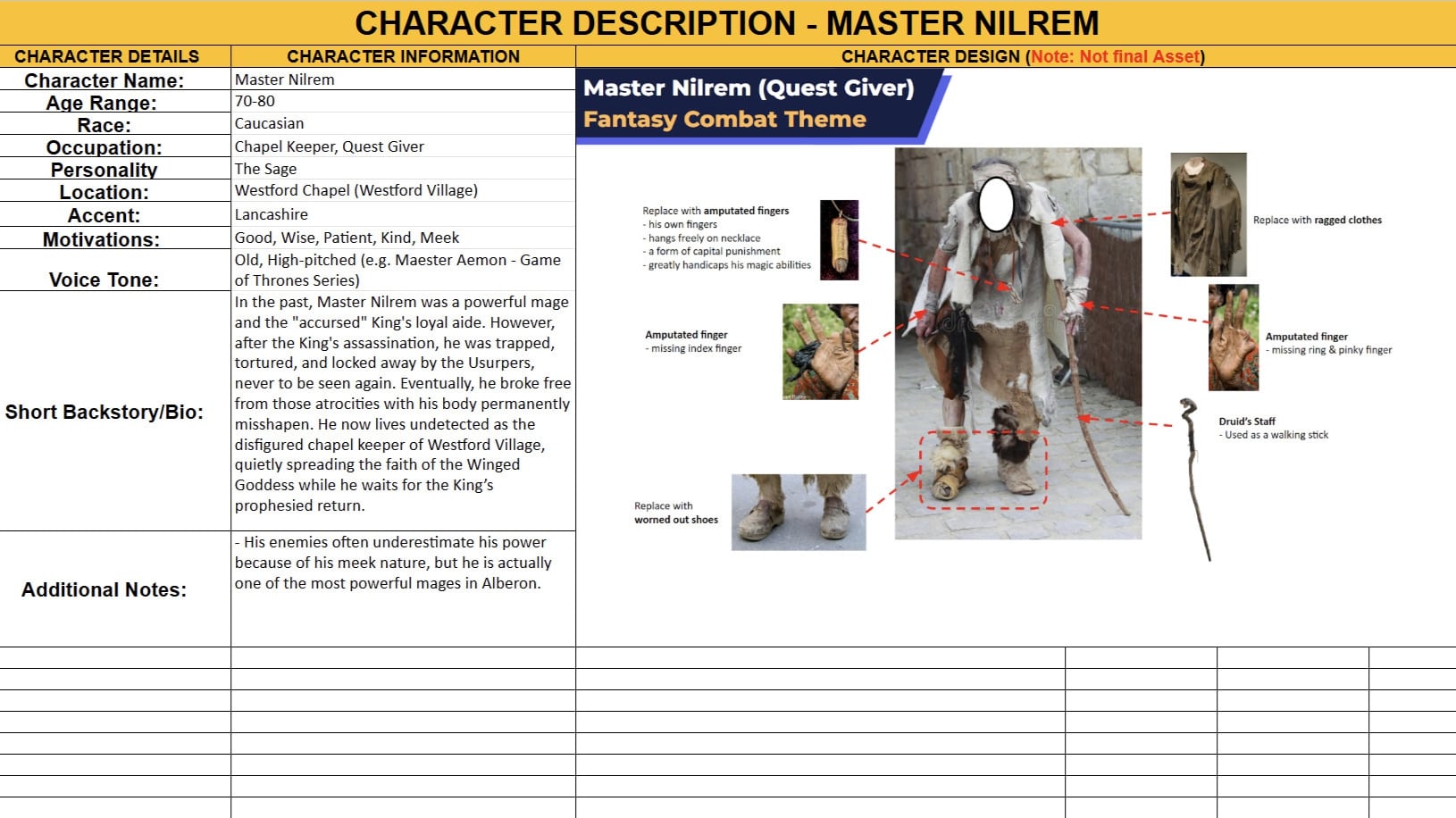
Quest Giver NPC: Master Nilrem
Designed a Quest Giver NPC and wrote their dialogue barks to connect them to their building, biome, and location. As well as crafted a storyline for this character connected to the gameplay.
Included the following design considerations:
- A “Mentor” type character that has clear knowledge of the player character’s past and the main threat to the area, so that he can provide clear instructions as a Quest Giver NPC.
- Dialogue that quickly establishes a bond with the player character by introducing him as an old and loyal ally. However, the bond could be tested via player choice (branching dialogue).
- Designed attacks to be unpredictable and over-the-top, a mix of humor and overwhelming power that is meant to create a memorable shock for the player, should they decide to betray this loyal friend.
- Researched popular depictions and reinterpretations of Merlin from Arthurian Mythology to understand players’ baseline expectations for similar character archetypes and find windows to surprise them.
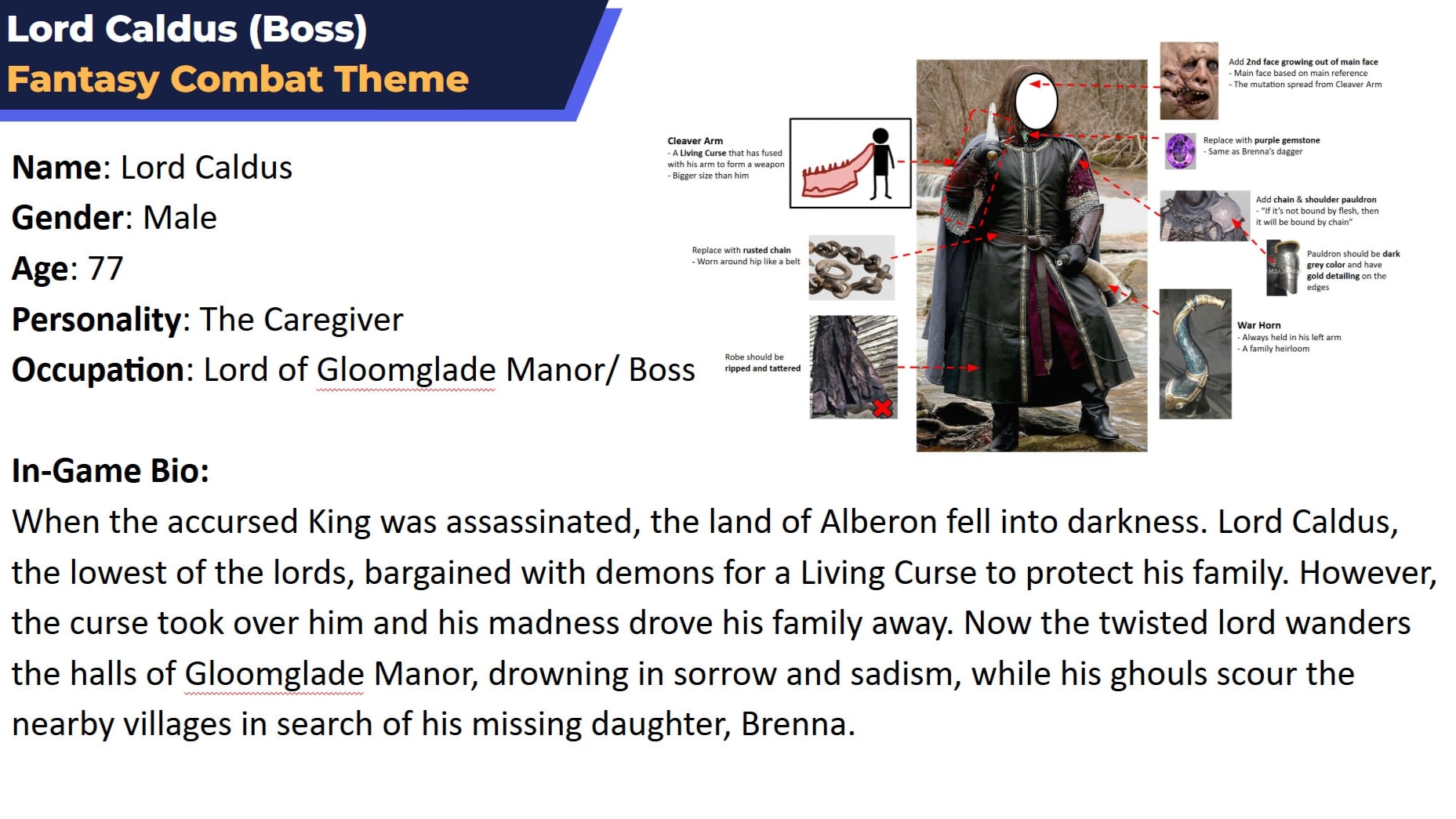
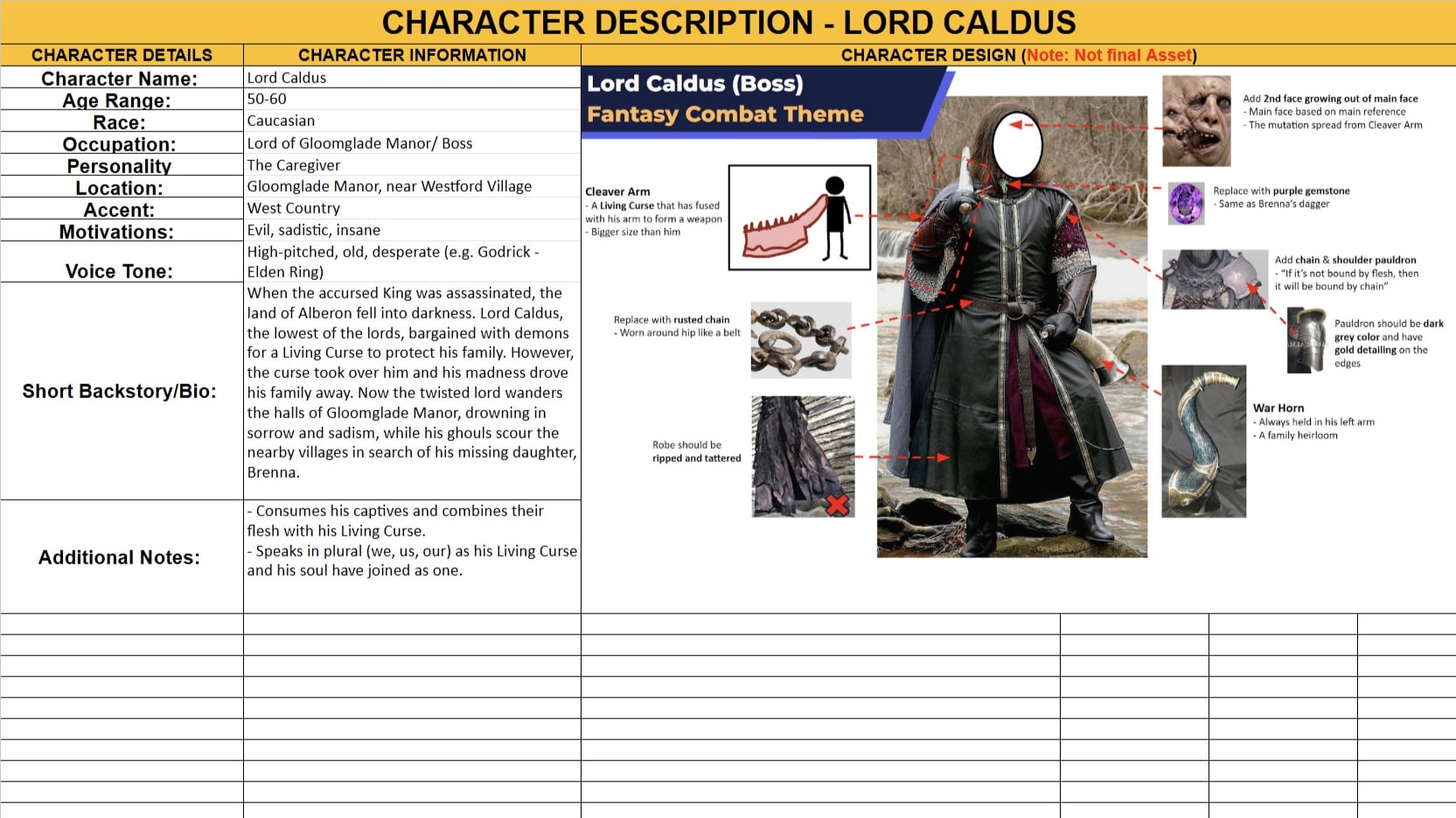
Boss NPC: Lord Caldus
Designed the antagonist/enemy boss NPC to include the following design considerations:
- Designed the character to be a combination of a sadistic lord and overprotective father to showcase how Curses in this world can twist a person’s good intent into pure evil.
- The player must feel like defeating this character is justified, yet offer clear hints (through barks & dialogue) that his actions stemmed from good intentions.
- As this is a tutorial Boss, the attacks were designed to be slow and clearly telegraphed.
- Designed the character to appear as an 11th century medieval lord with a mix of grotesque fantasy elements meant to evoke horror and awe in the player.
Storyboarding & Trailer Script Writing
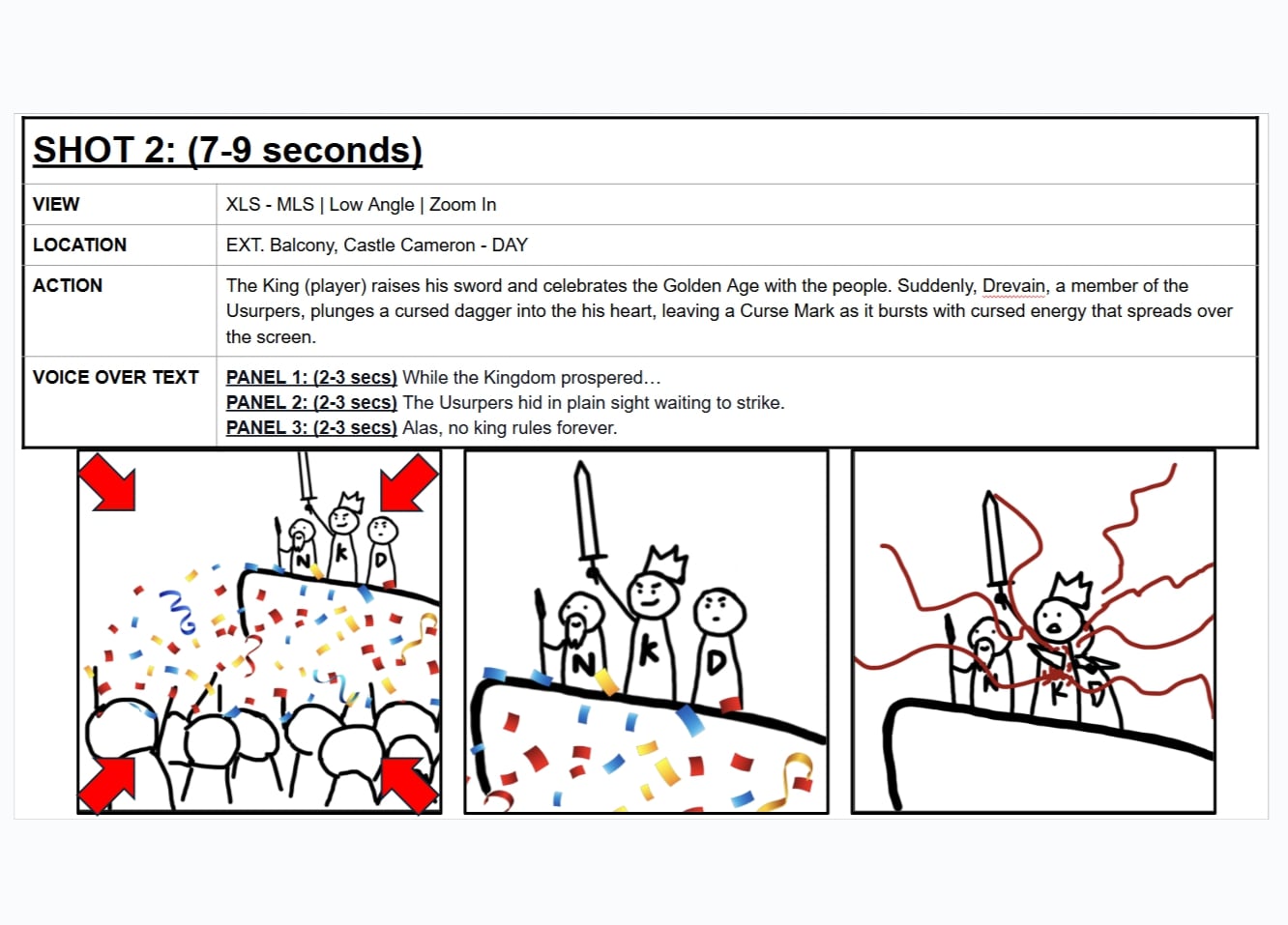
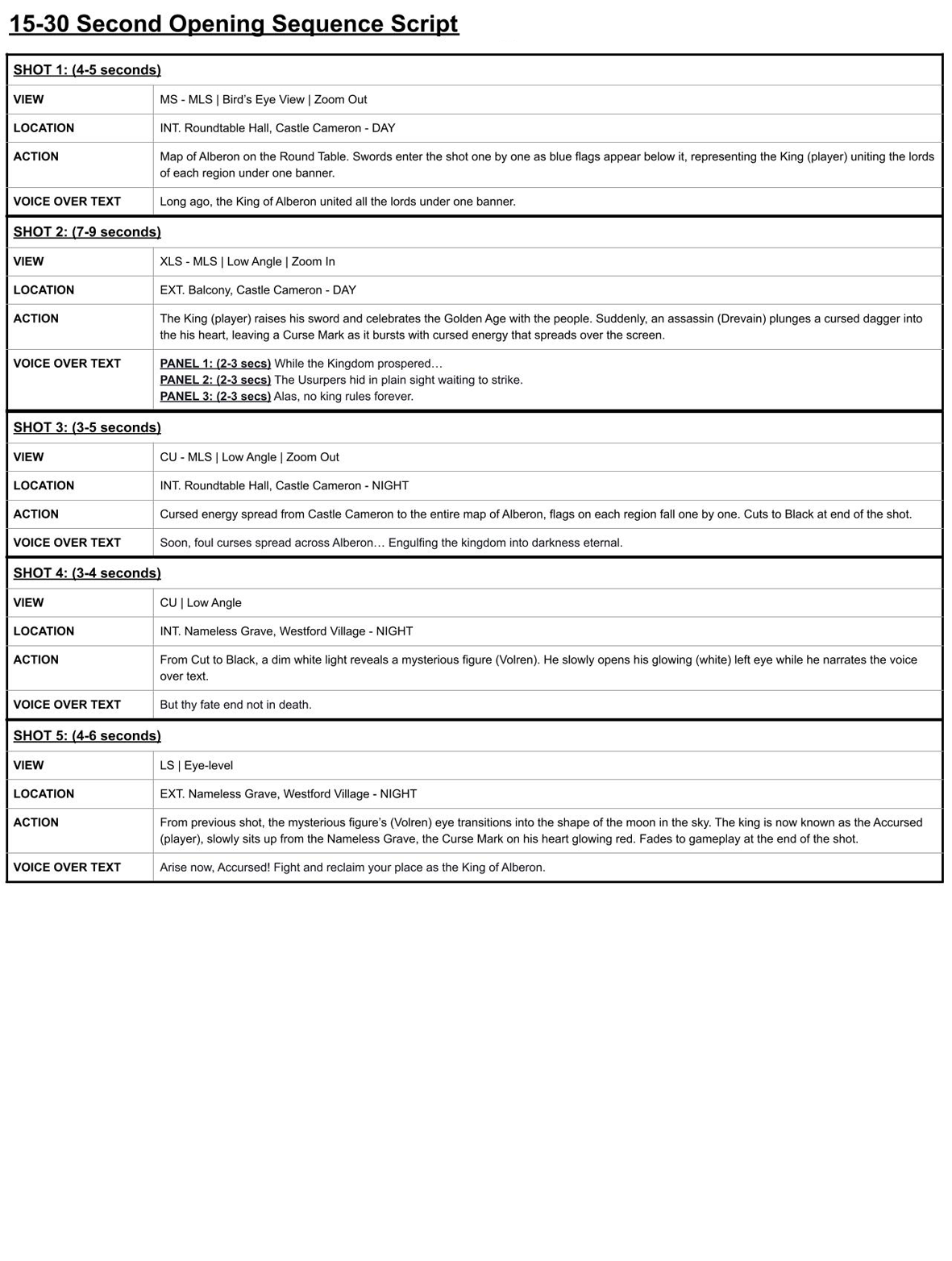
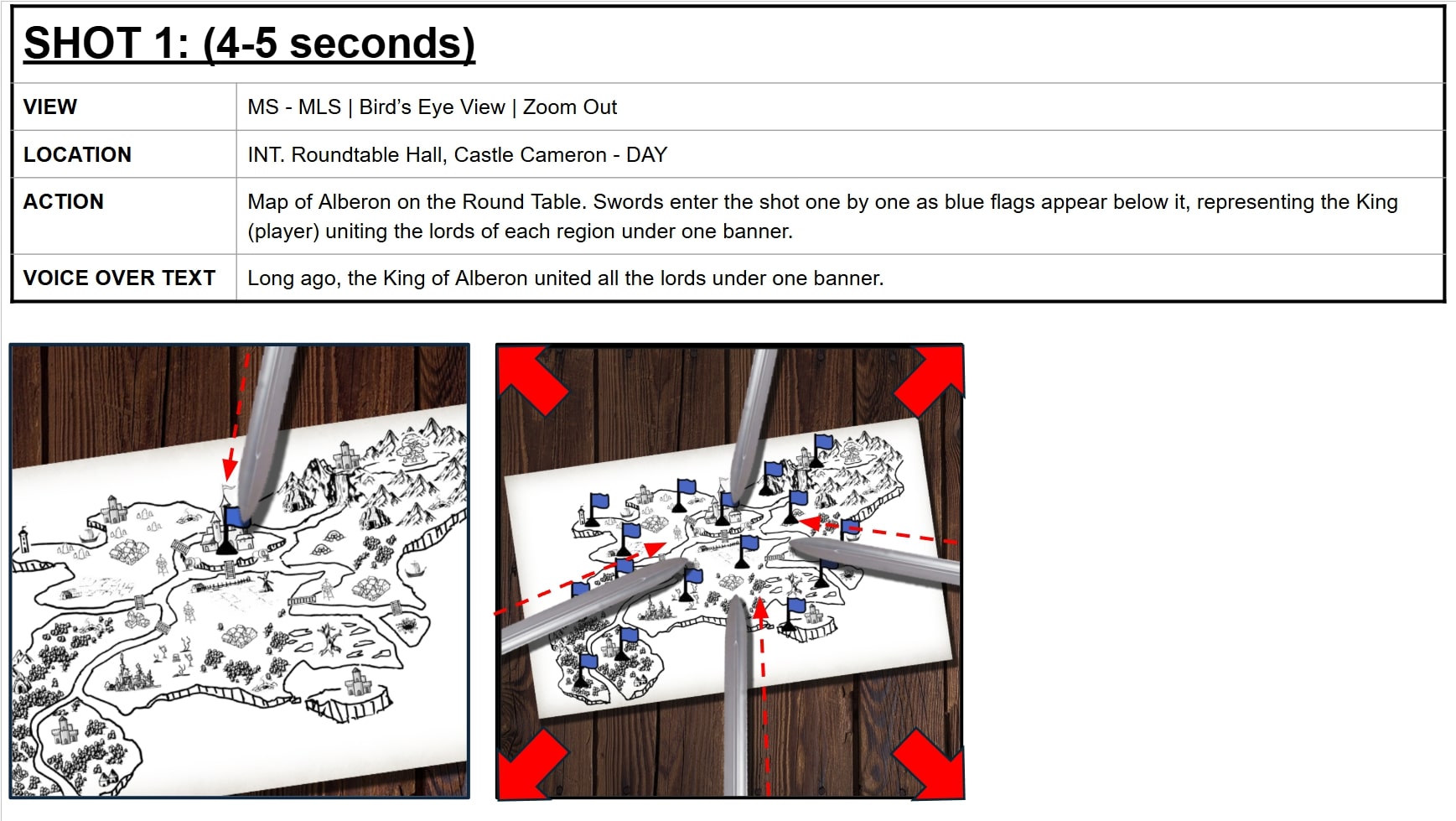
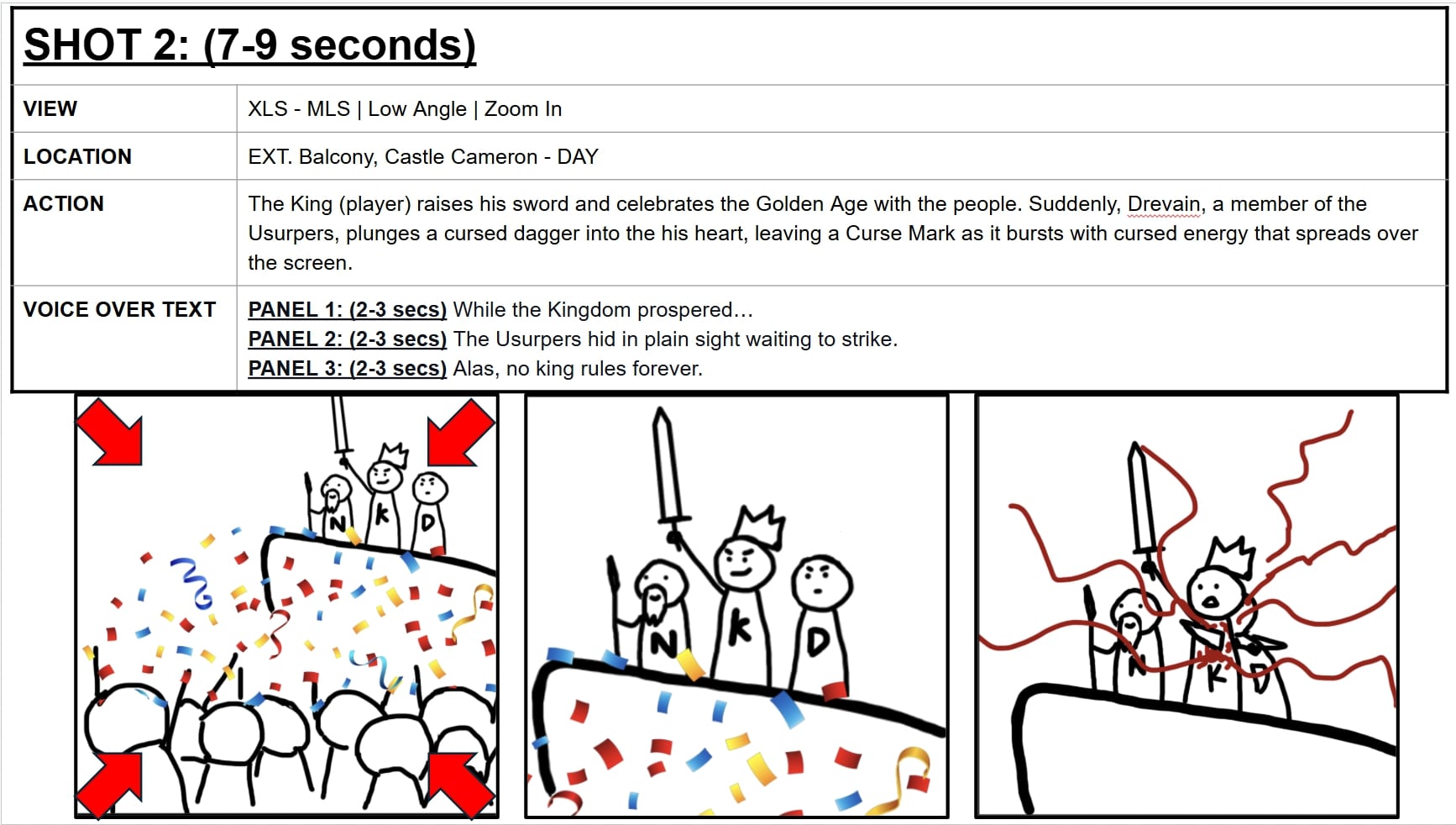
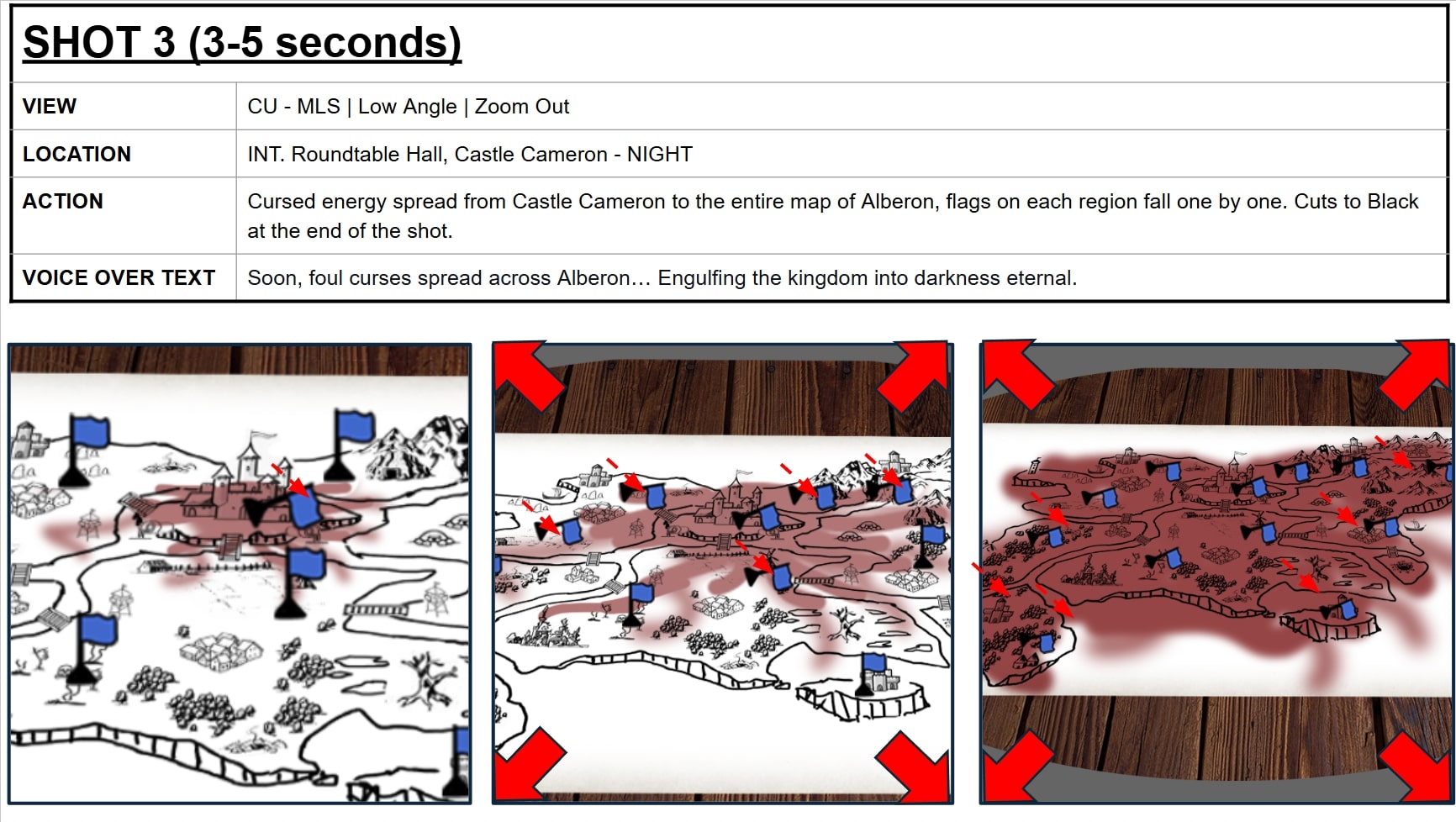
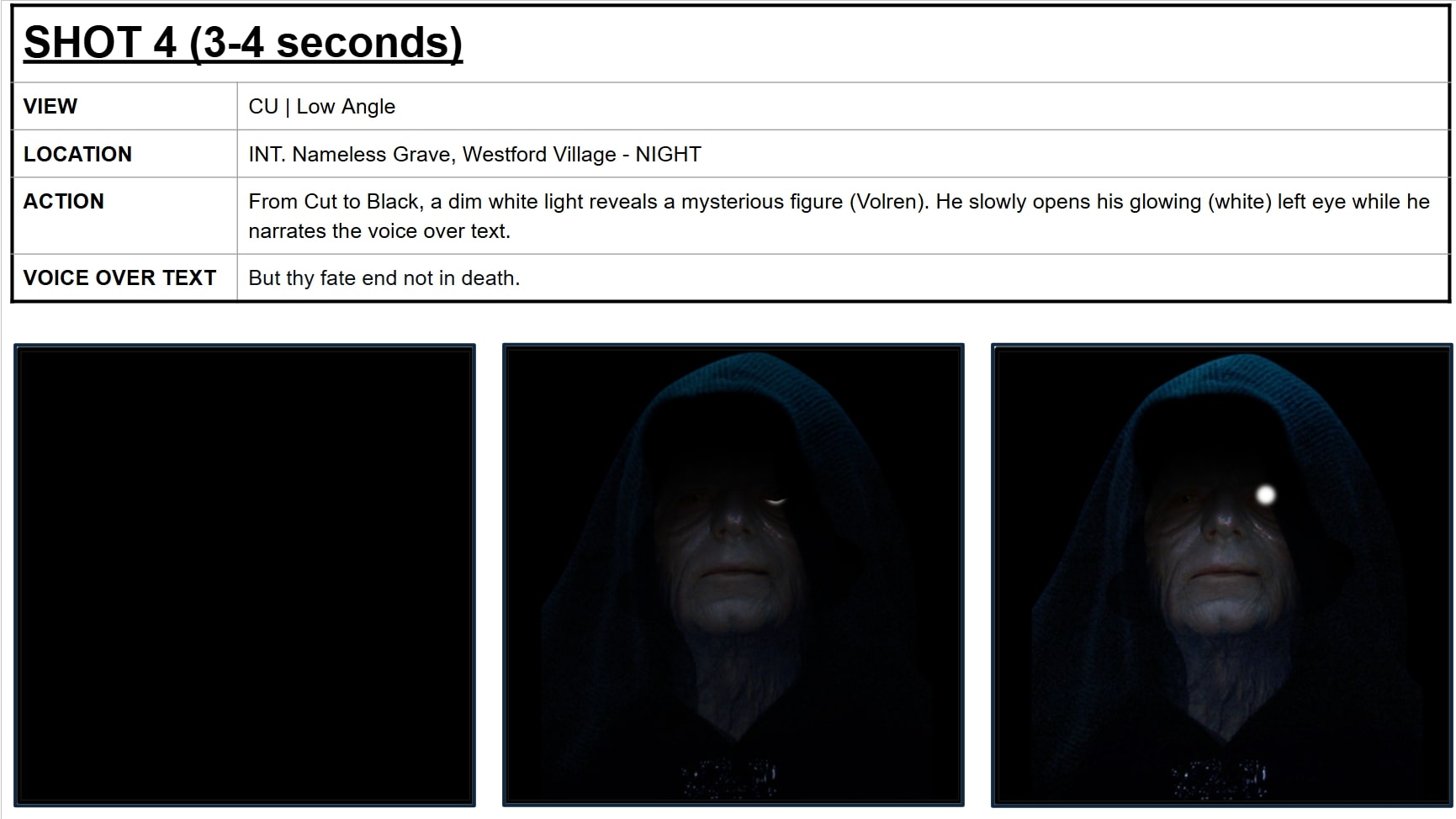
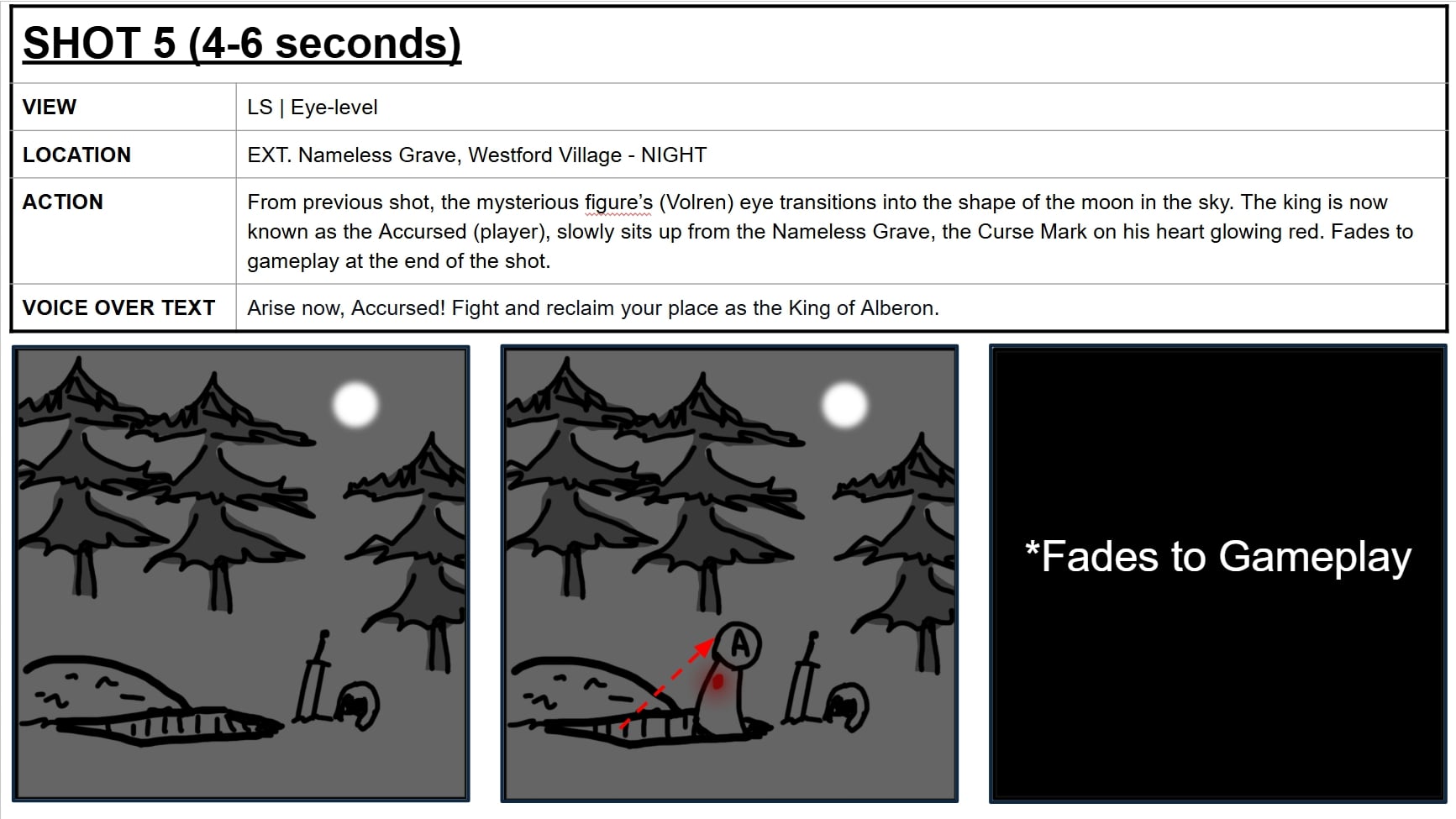
Wrote a storyboard script for the opening sequence of the game, and designed a preliminary storyboard to collaborate with the art and marketing teams, and get internal approvals:
- Designed shots with worldbuilding in mind, creating a sequence that can be used as both a trailer for the game and the intro cinematic before the tutorial.
- Included clear location, camera view, and action for use by the art team.
- Designed a storyboard prototype with simple assets for quick and efficient communication between teams.
Voice Over Documentation
Designed and Formatted a Voice-Over Script Document:
Created 4 Voice Over Actor documents for the Player Character, 2 NPC quest characters, and the enemy leader that provided detailed information to support the actor and provide faster and better voice recording sessions.
Each document included:
- Character Design images, character bios, personality notes, motivations, and vocal directions for each character.
- All lines of dialogue for this character, along with scene details and quest summaries to provide situational and mood context for the voice actor.
Worldbuilding
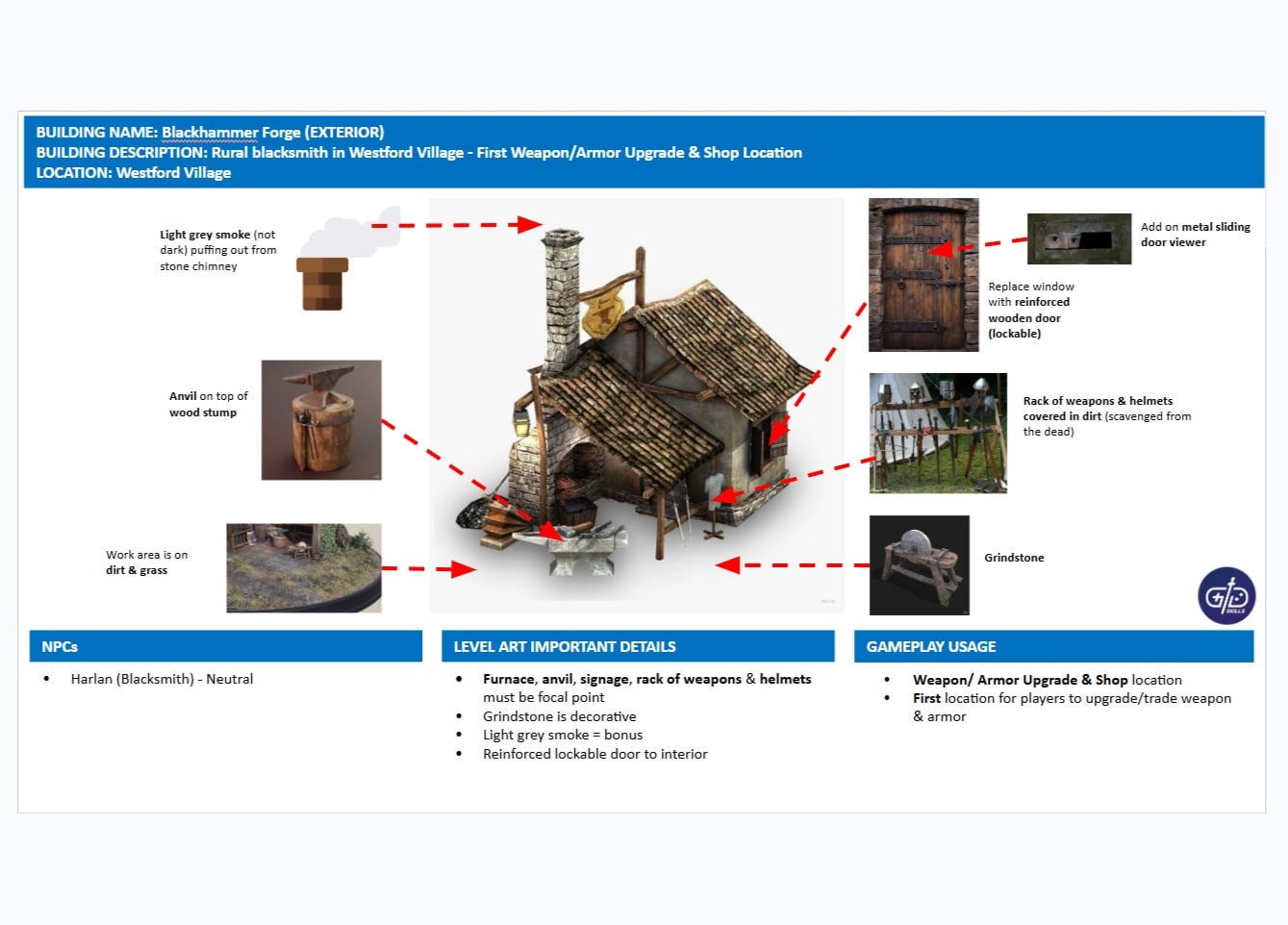
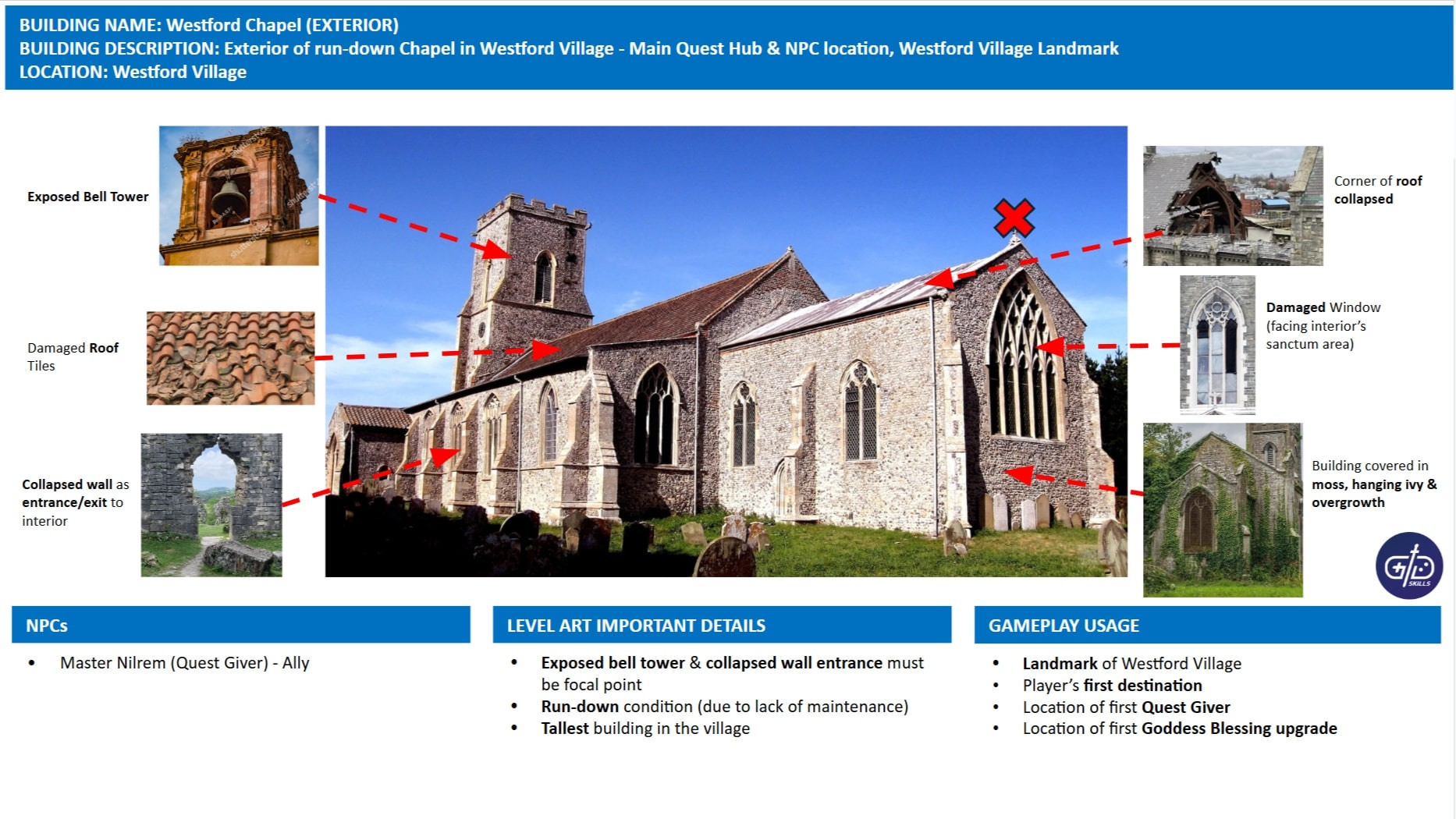
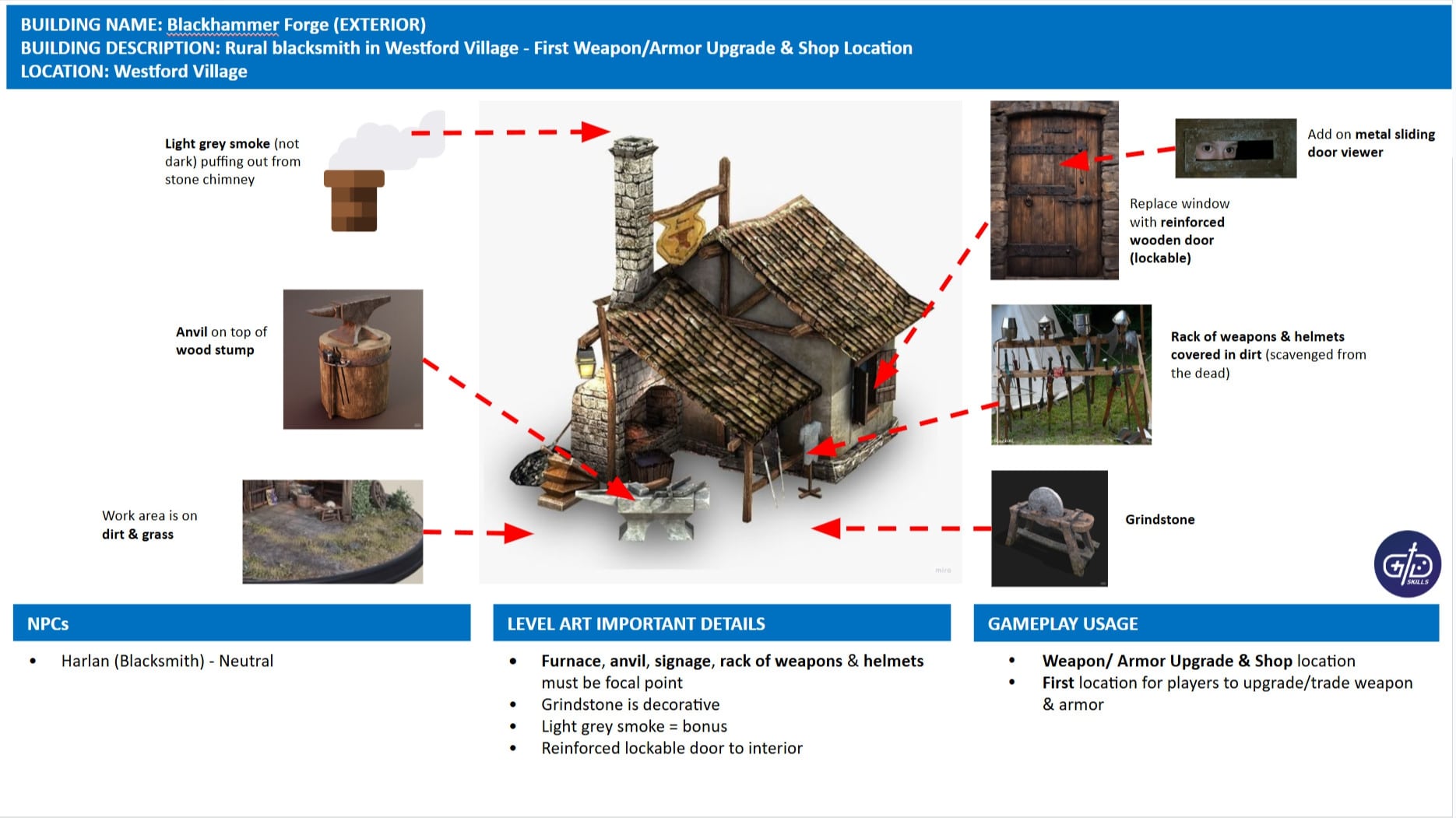
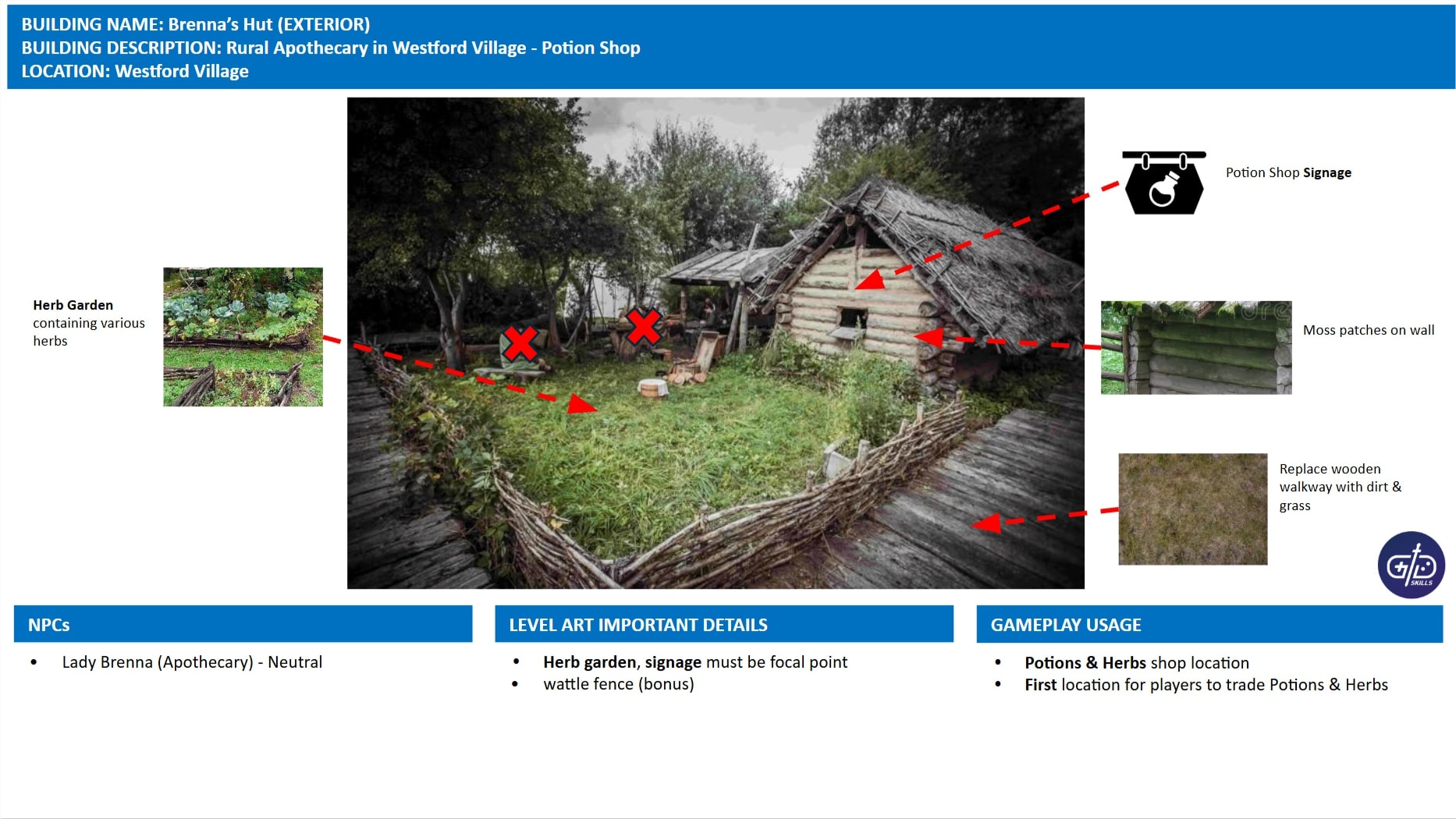
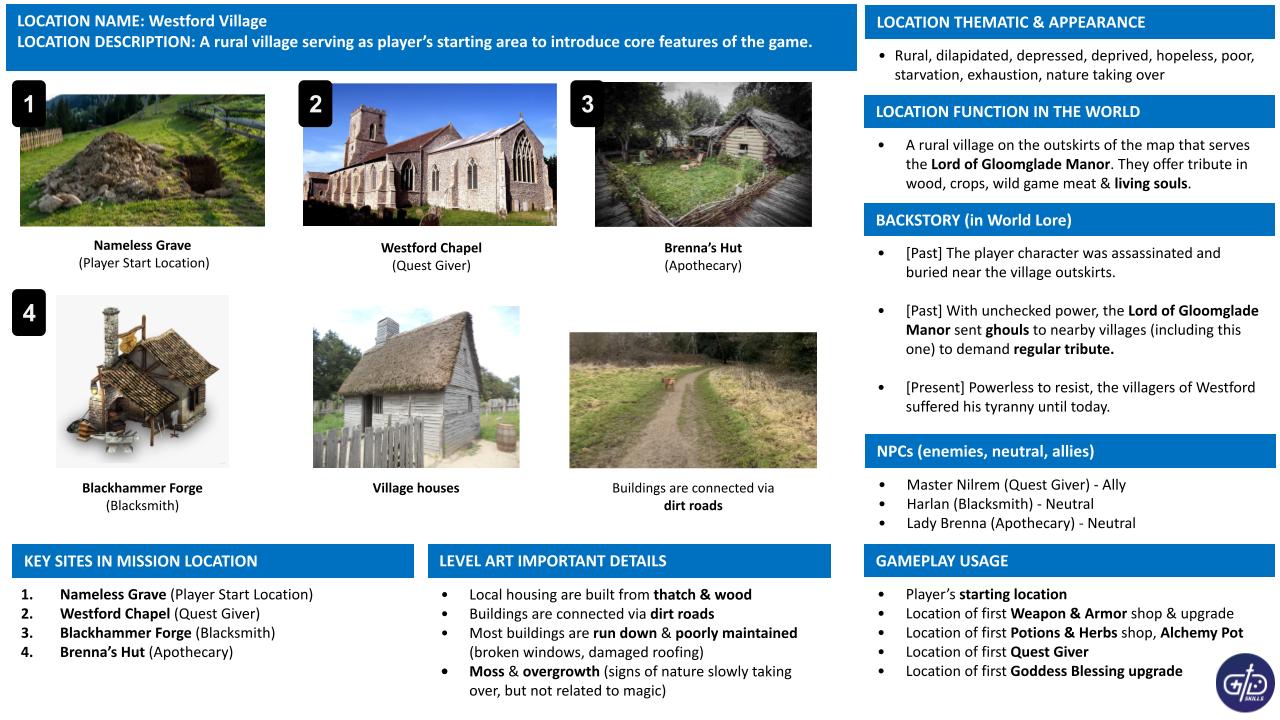
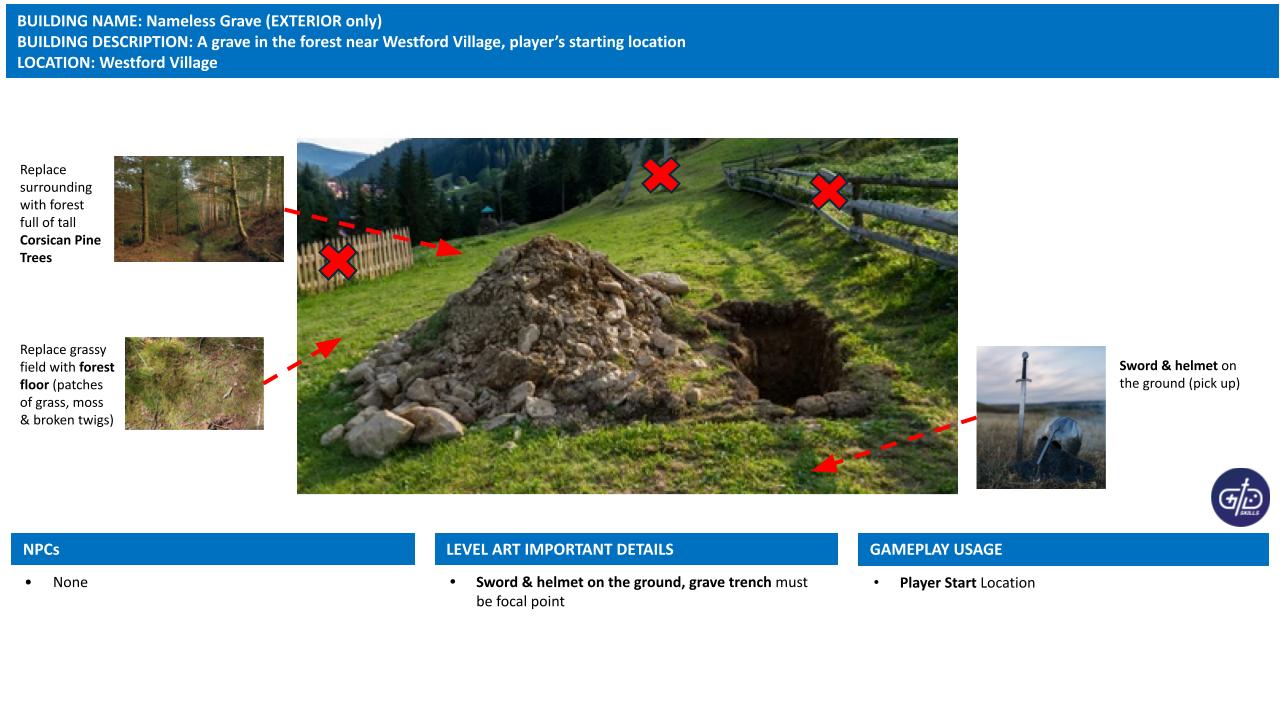
Fleshed Out The Exterior Locations for The Map
Designed the building documents for the art and design teams to achieve the following design goals:
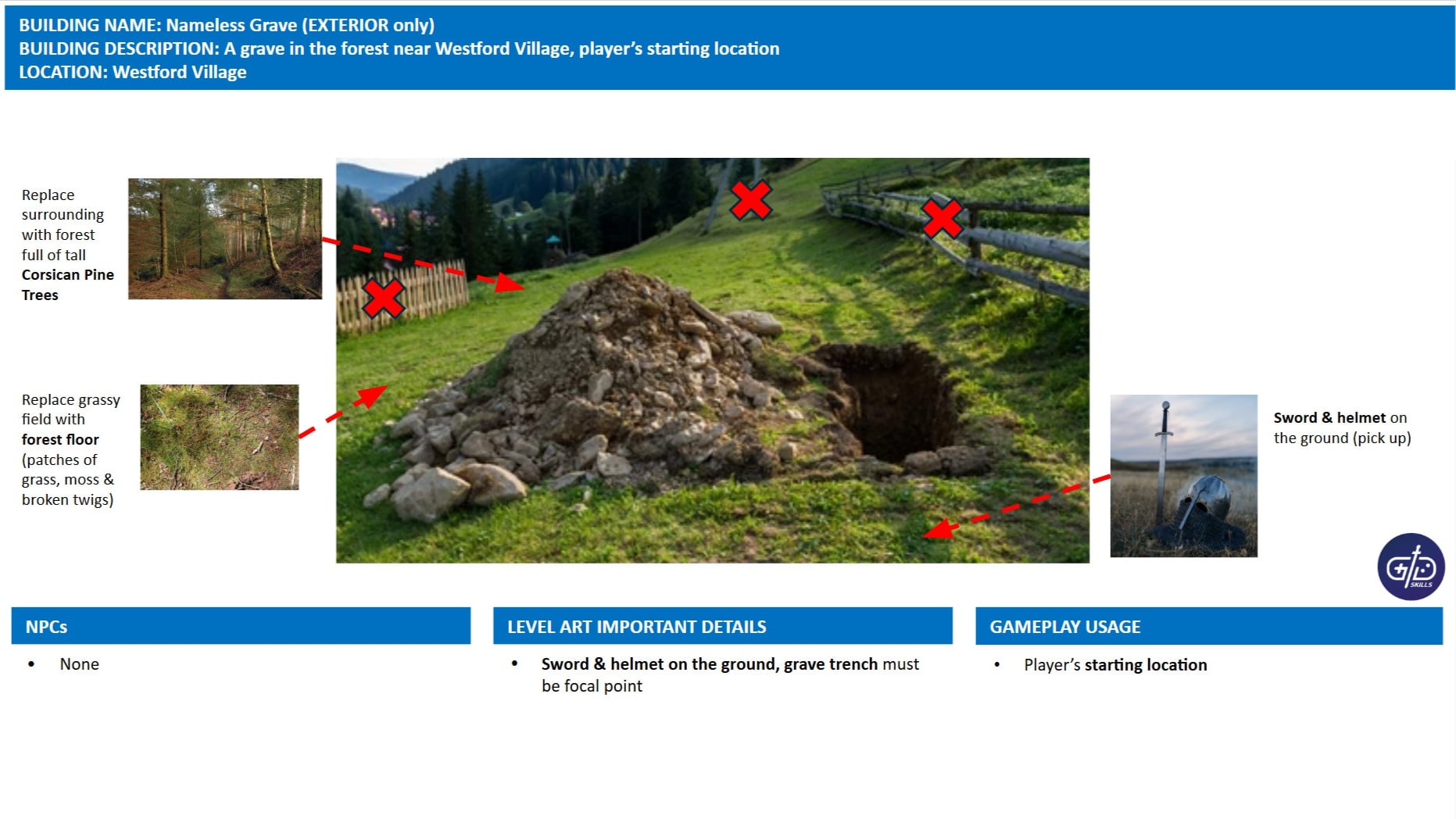
- Provide a key reference image with notes and additional information to further refine design intent and supply the art team with clear materials to inspire their work.
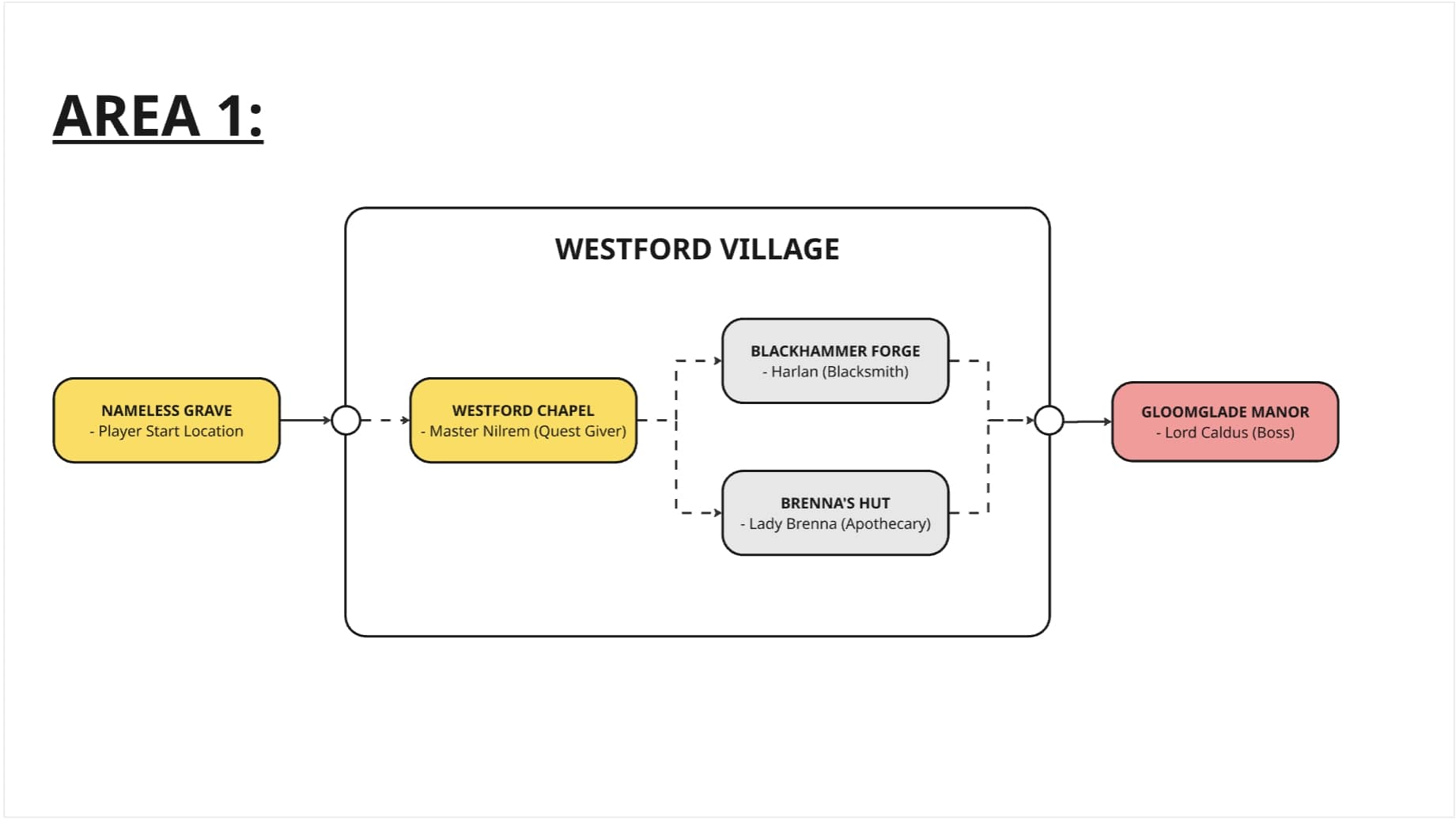
- Clearly indicated if the building document was for the interior or exterior of a building, as well as its name and location number, for the team to reference the town map with ease.
- Included notes on the important details, gameplay usage, NPCs, and brief descriptions of NPCs relating to the building for quick reference.
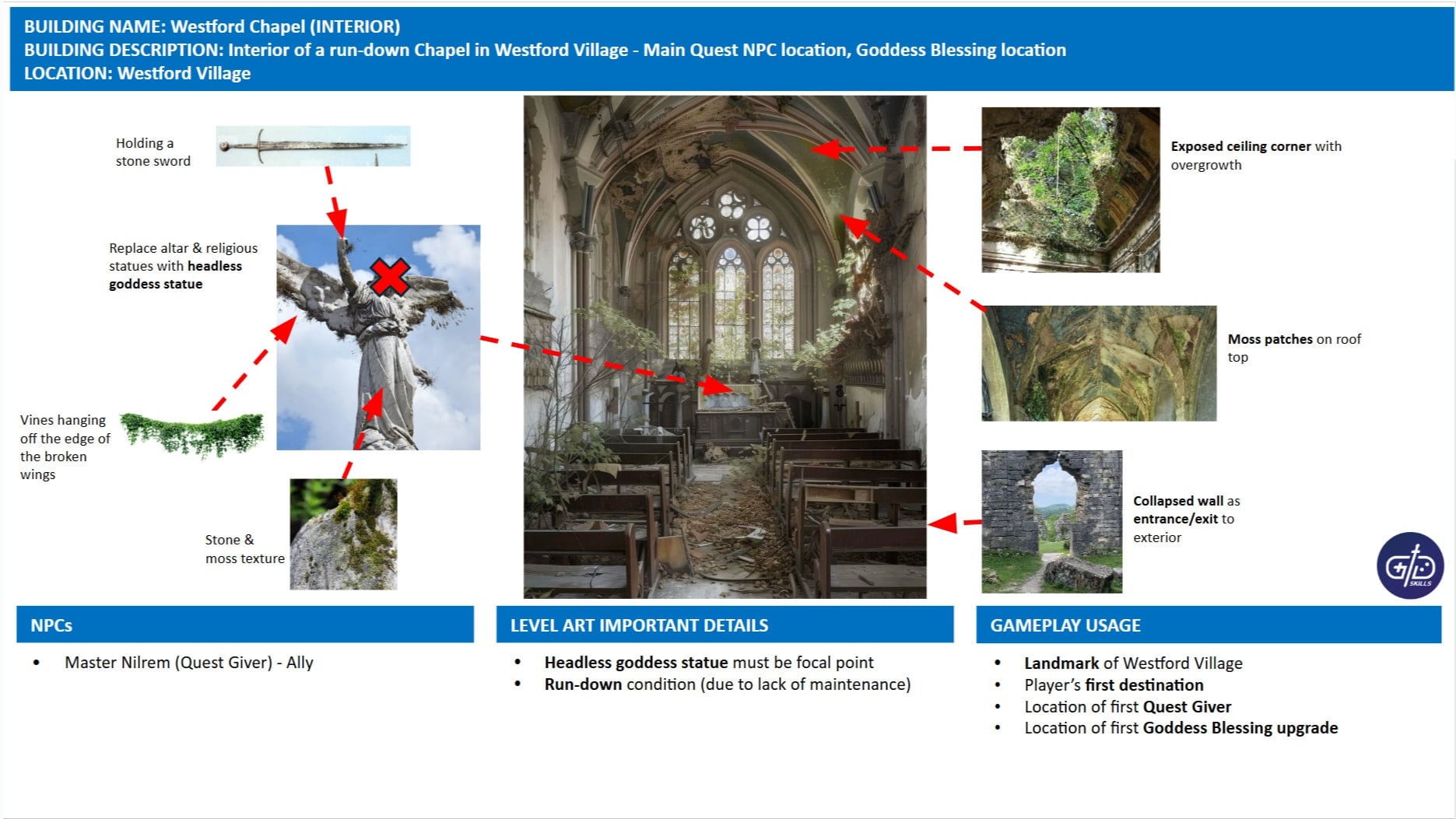
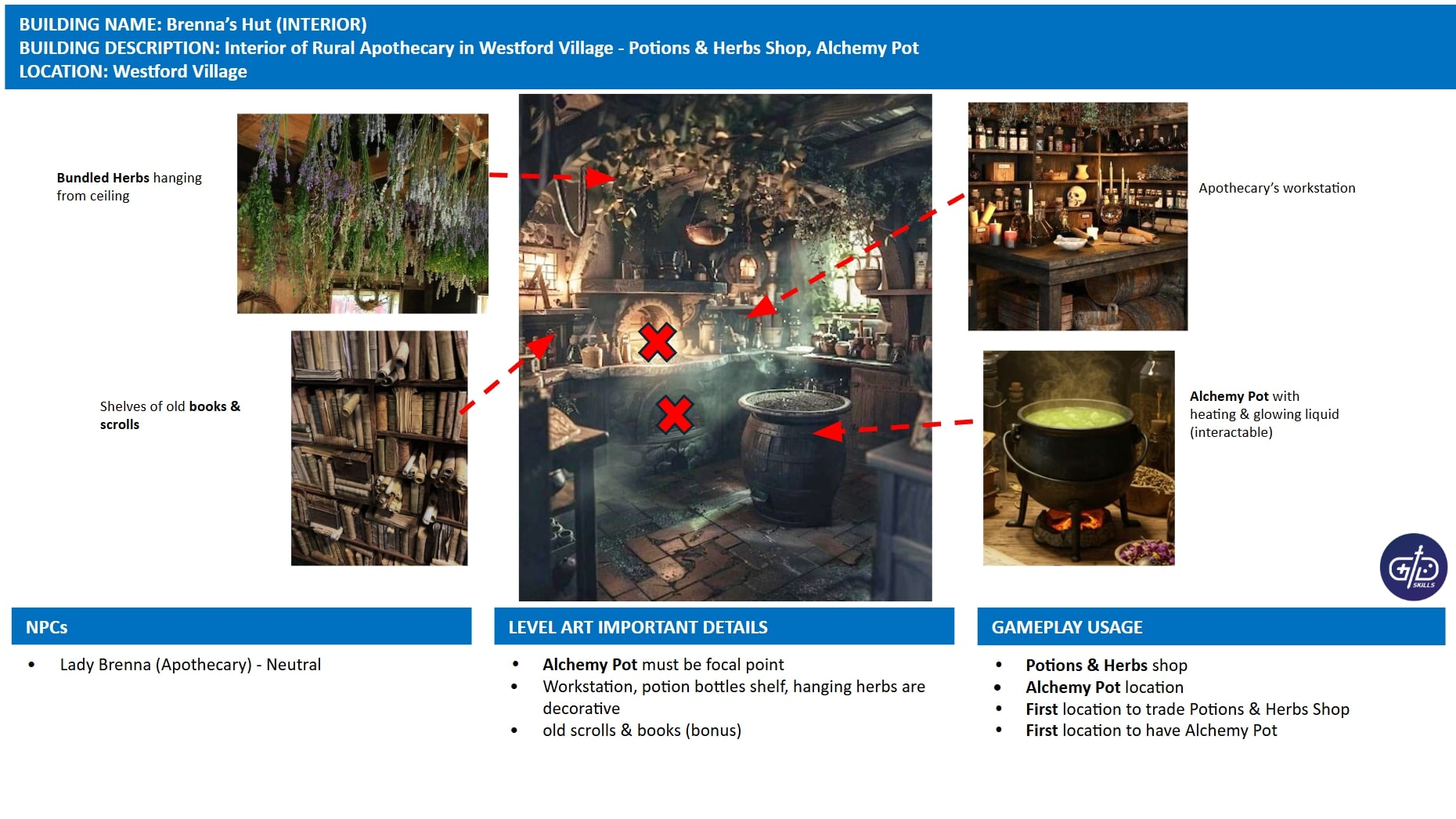
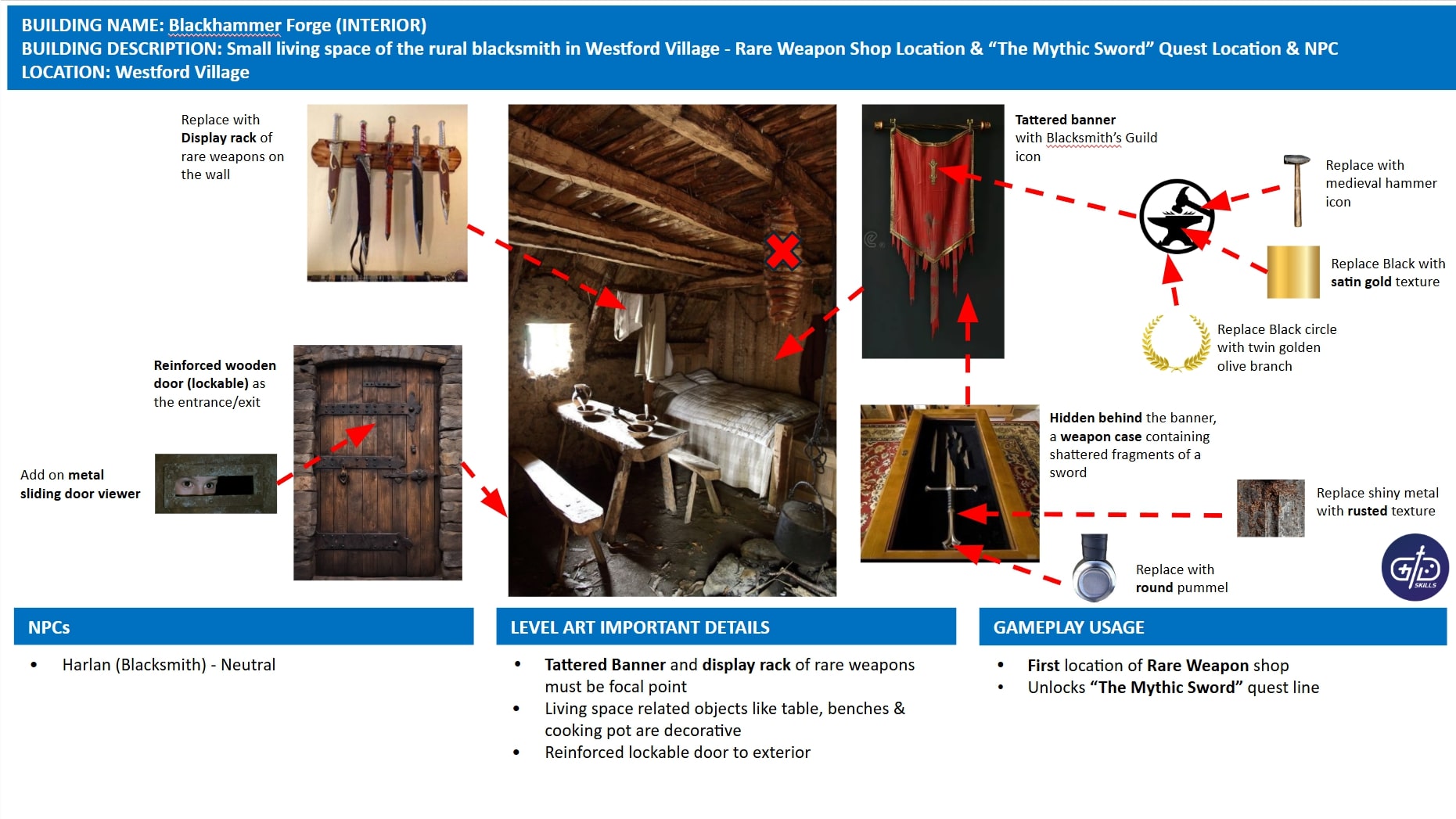
Fleshed Out The Interior Locations for The Map
Designed the building documents for the art and design teams to achieve the following design goals:
- Provide a key reference image with notes and additional information to further refine design intent and supply the art team with clear materials to inspire their work.
- Clearly indicated if the building document was for the interior or exterior of a building, as well as its name and location number, for the team to reference the town map with ease.
- Included notes on the important details, gameplay usage, NPCs, and brief descriptions of NPCs relating to the building for quick reference.
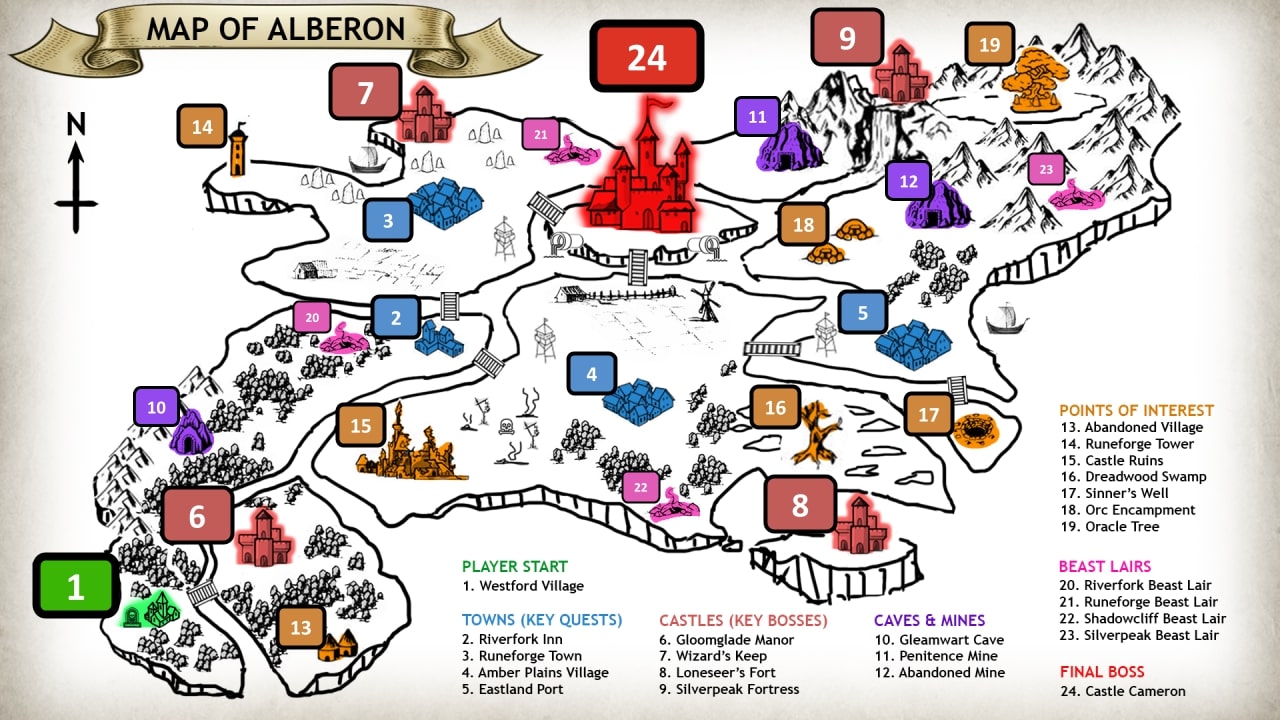
Created World Map (Cartography)
Created a world map to achieve the following design goals:
- Designed the world to create memorable story environments and unique biomes as a natural boundary for world scope.
- Divided the key quest locations across the map to encourage exploration for players to unlock new skills and narrative arcs as they reclaim castles from enemy bosses.
Genre and Content Research
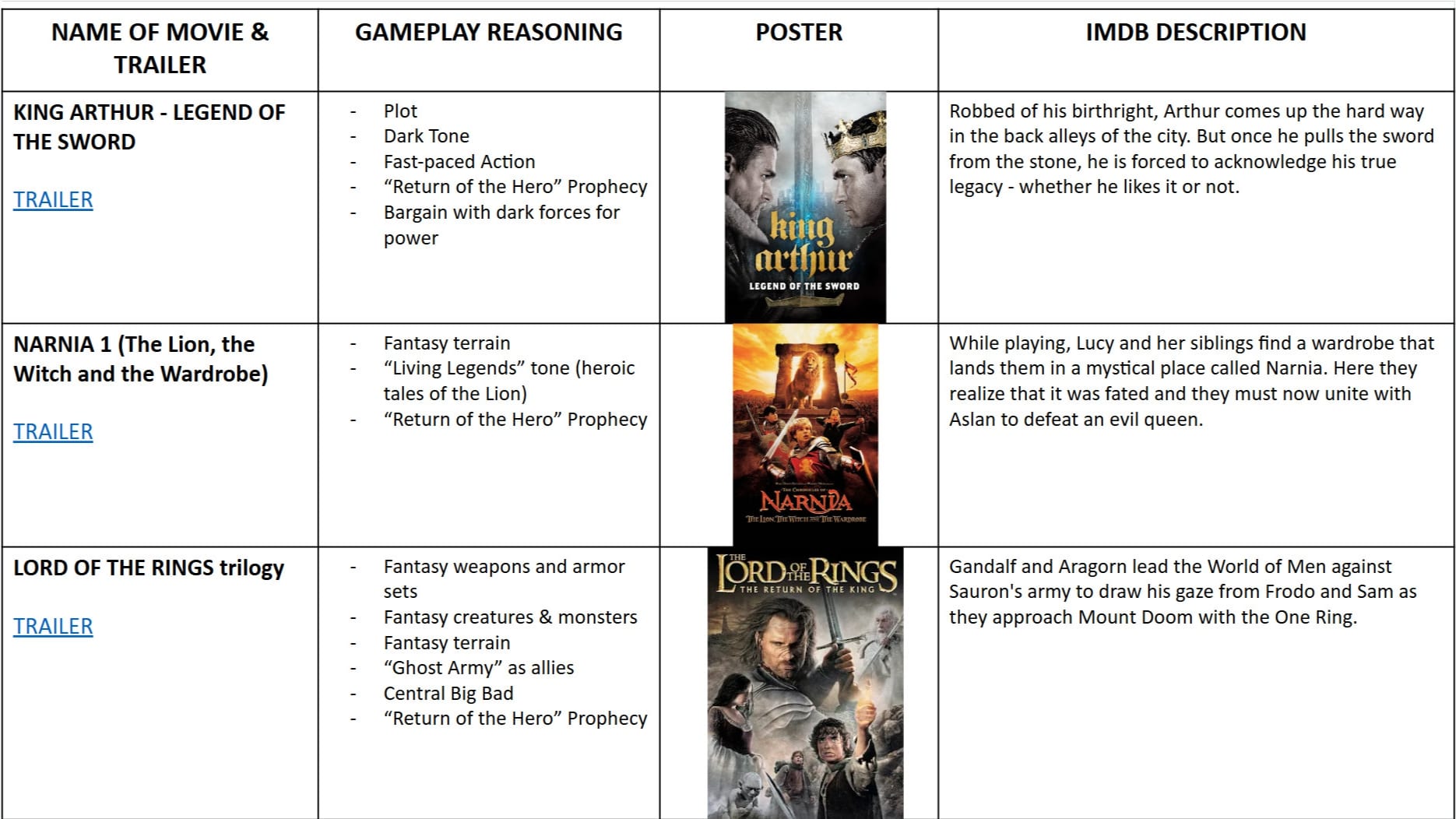
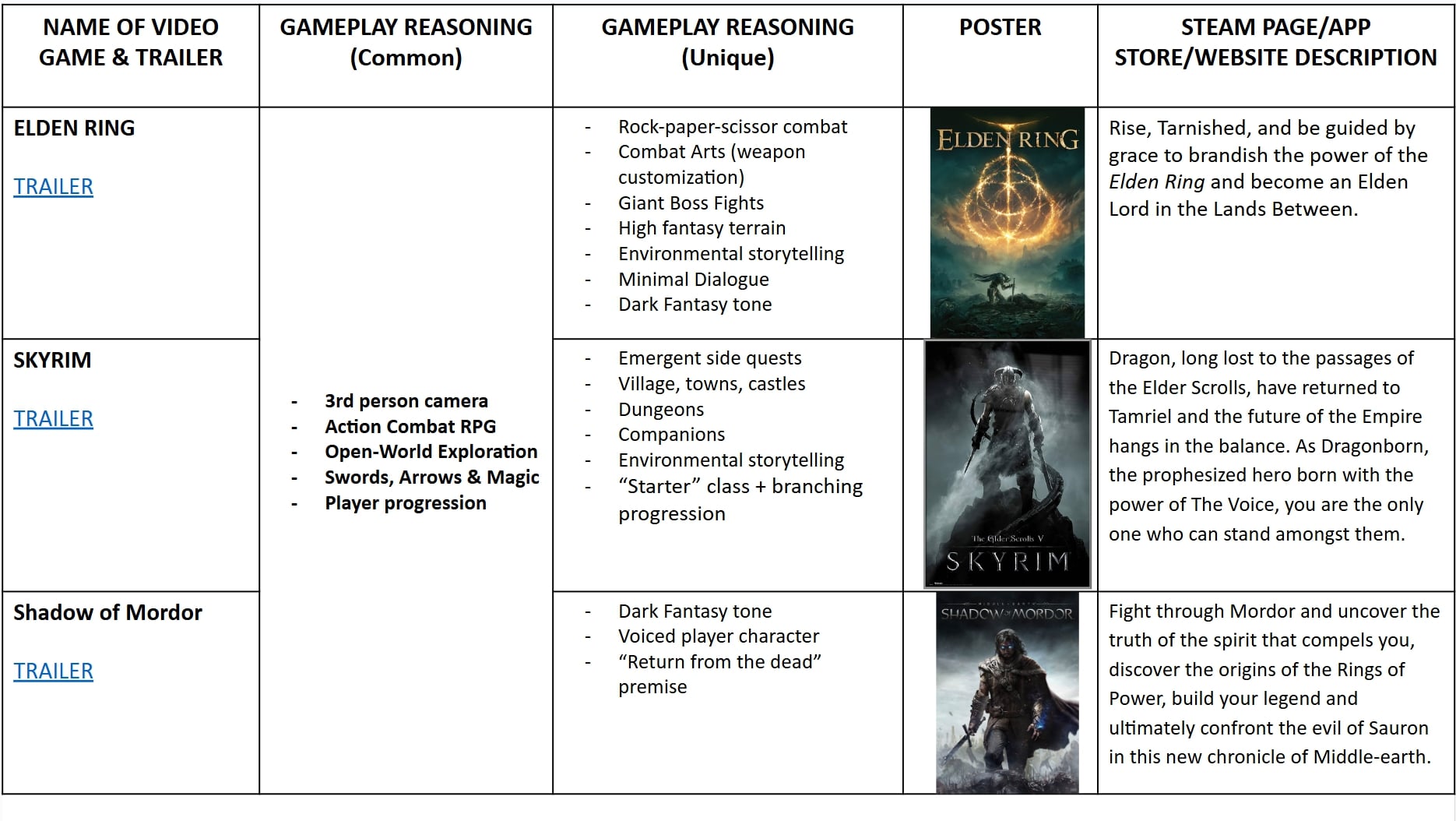
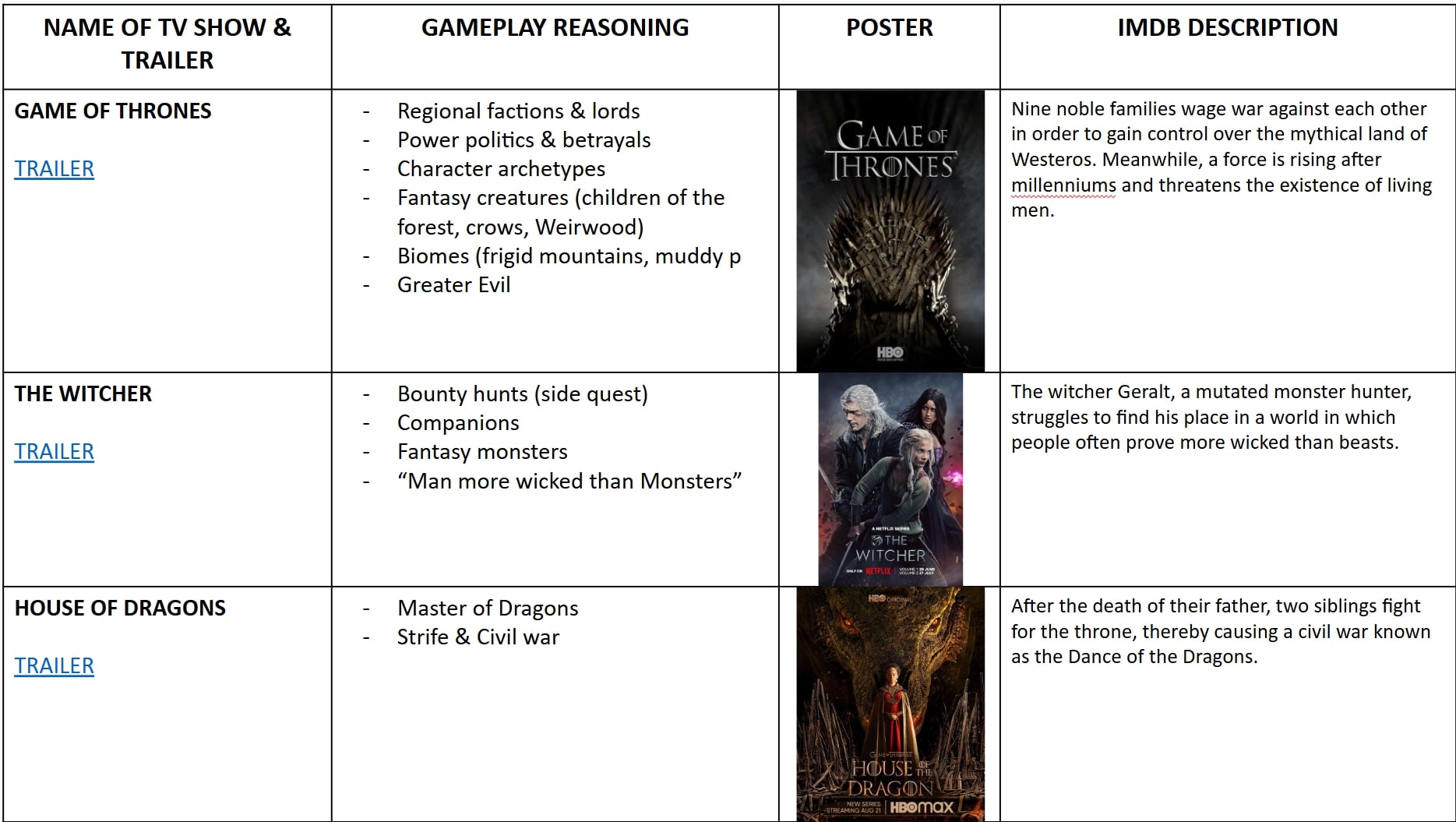
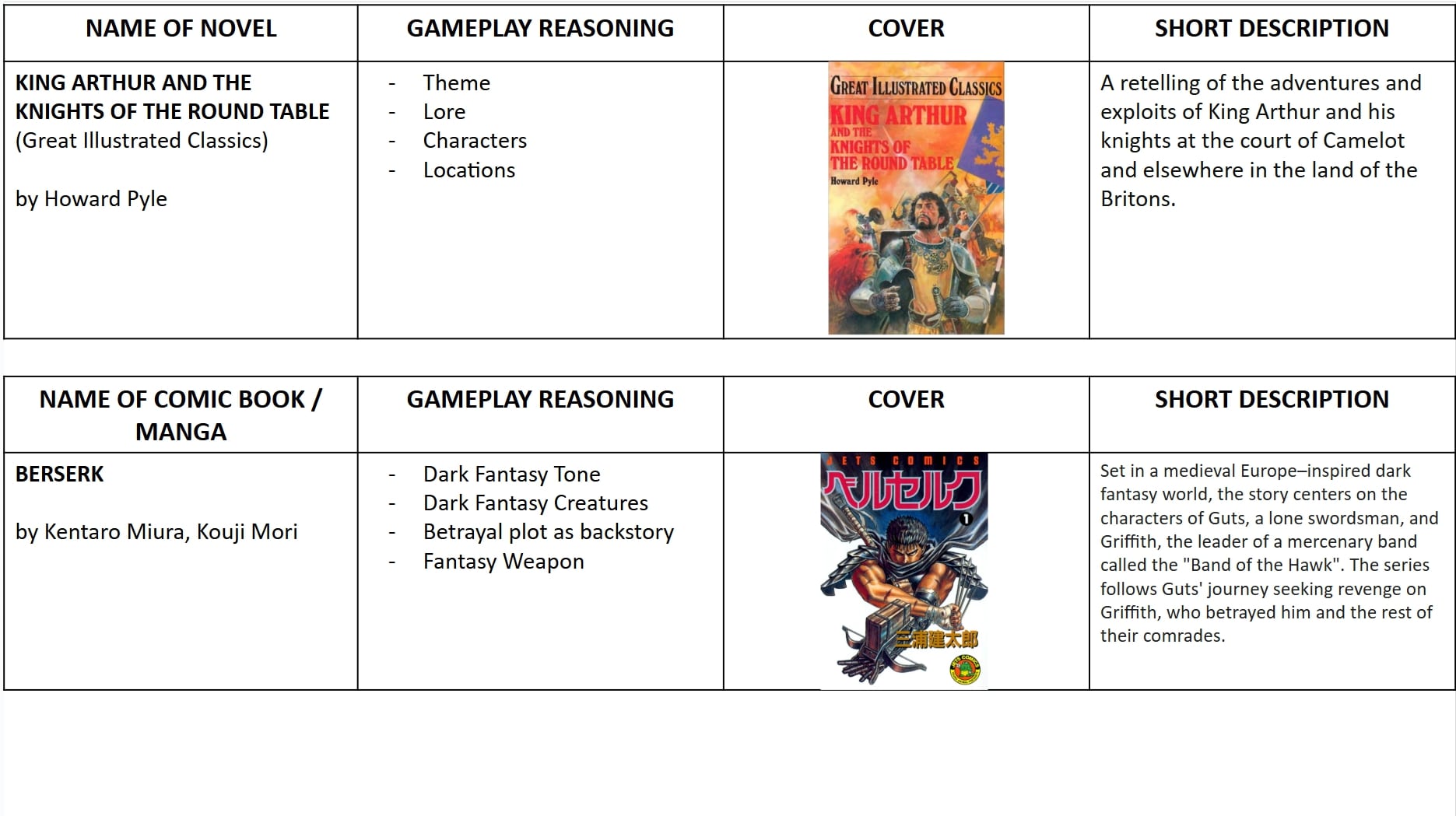
Performed high-level research document to help determine the game’s popularity and help the marketing team do preliminary research with the target audience, by critically consuming content from similar games as well as movies and shows that share narrative themes:
- Created a list of movies, TV shows, and games, including the official synopses of the titles, and links to their trailers
- Wrote focus notes on what elements to draw inspiration from to prove similar ideas have interest across several audiences